
Emergency Water Removal Salt Lake City, UT
Your floor is under water and the hose has to reach it. We run from the curb to the furthest wet point in the building, and a person picks up the phone at any hour.
We bring a truck-mounted extractor to your door and pull the standing water off your floor in one visit. Then we remove the soaked material that will not recover and dry what is left. Call (801) 903-2904 and we start loading for it.
Water is on your floor right now, and what you can see is rarely all of it. It has already run under the cabinet kick and into the bottom of your walls, where none of it shows from the doorway.
So the only thing that matters in the next few minutes is how fast we get a machine on it. We answer (801) 903-2904 at any hour, whatever time you are reading this.
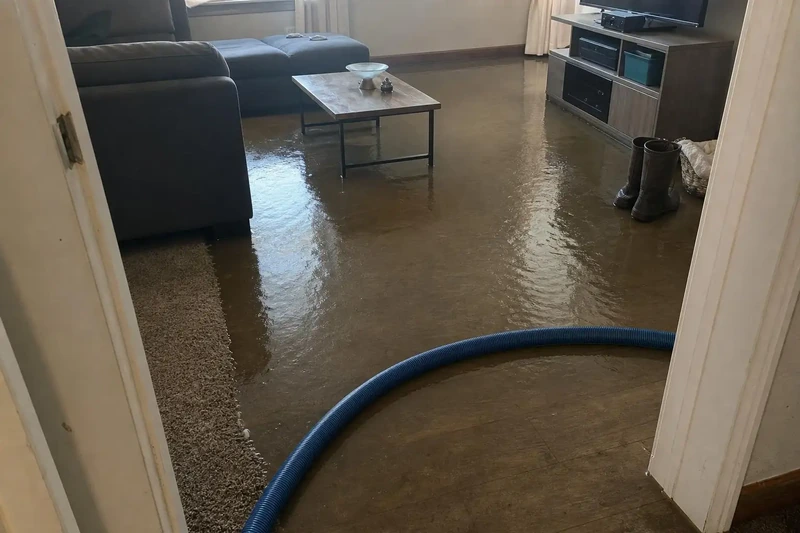
Shut the Water Off and Stay Off the Wet Floor
None of this requires equipment, and all of it genuinely changes how your job goes. Shut the water off if you can reach the valve safely, meaning the main shutoff or the valve behind whatever appliance let go. Keep everyone off the wet floor and away from anything electrical, because you cannot see what the water is sitting on. Then lift what you can still carry, so rugs, boxes and electronics get up onto something dry before the water reaches them.
Then leave the rest alone. Do not pull up carpet yourself, because a soaked carpet weighs several times what you expect and the tack strip underneath is a row of exposed nails.
Water Extraction: How We Get the Standing Water Out of Your House
Water extraction is the part that decides how much of your floor survives, and it starts at the curb. Our truck-mounted extractor stays there while we bring hose and a weighted wand in through your door. That machine never stops to empty itself the way a portable unit does, so we pull without a break until your floor is clear.
The setup runs on hose length rather than room count. We take the hose to the furthest wet point in the building and work back toward the door from there. Walking back across floor we have already pulled pushes water into it again, and that turns one visit into two.
What we do on each type of floor
- Carpet. We work the wand slowly in overlapping passes, because rushing it leaves water for the dehumidifiers to chase for days.
- Carpet padding. The pad is a sponge and almost never recovers, so we float the carpet, cut the pad into strips and haul it out your door.
- Tile and sealed concrete. We squeegee the water toward the wand and lift it off in a pool.
- Laminate and glued-down plank. Water underneath will not lift while the covering is down, so we take the covering up and get at it directly.
That last step usually decides whether we dry your floor or carry it out. Extraction is the highest-value hour of the entire job, and we treat it that way.
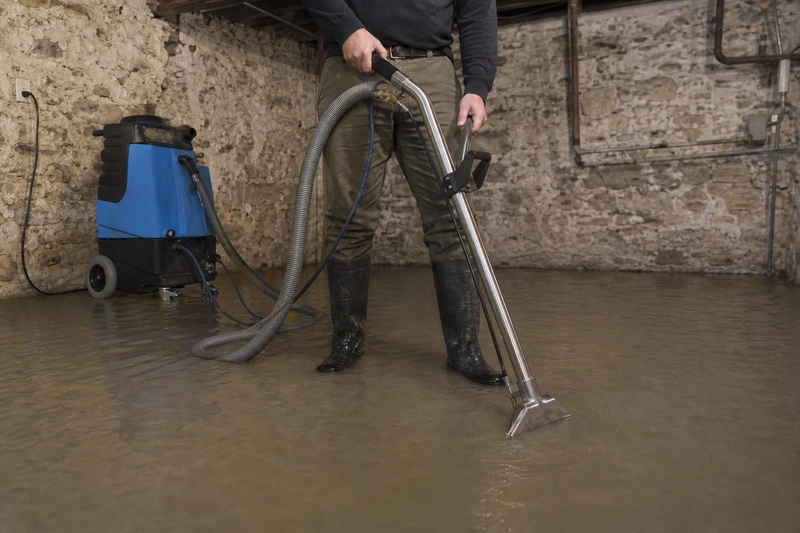
Why the First Hour Matters More Than Anything Else
In the first hour the water is still mostly sitting on the surface, and almost everything in the room is still in play. We can dry carpet and hard flooring where they lie if we lift the standing water off them now.
Half a day in
By then it has stopped being a floor problem. It has gone behind the baseboard into the stud bays and under your base cabinets. That space is a sealed box with wet particle board sitting in it.
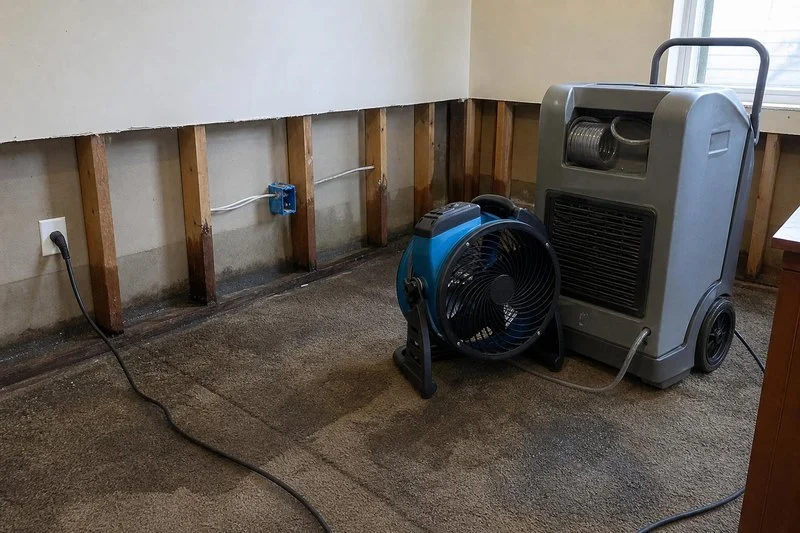
So we pull the baseboard off and drill weep holes into the wall cavity. That moves air inside the wall without us opening the whole thing up.
Day two and day three
Now we are cutting rather than drying. We flood cut the saturated drywall in a straight line above the wet, bag the wet insulation, and carry out material we could have saved on day one.
That gap between hour one and day three is why we would rather be loading hose than talking. Call (801) 903-2904.
How We Dry the Building After the Water Is Gone
We take the loose water with the hose. What stays behind sits inside the material and has to leave as vapor.
An air mover is not a dryer. We aim them low along the walls and into the cavities we just opened. That strips the damp air off the surface so the material keeps giving water up.
Dehumidifiers then take that water back out of the air and dump it, which stops your wet rooms from quietly humidifying the dry ones next door. That loop is what structural drying actually is.
Why the hose does more for you than the machines
Salt Lake City sits at 4,223 feet above sea level, and people assume the altitude does some of the drying for them. Nothing about the elevation empties a soaked carpet.
The one lever we control is how much water we lift mechanically before the machines ever run. Call us early and it leaves through a hose rather than a spoonful at a time.
We come back and move the equipment as the wet area shrinks, because a fan pointed at a dry patch does nothing for you. If the noise is more than you can live with, call us and we will move it rather than have you switch it off.
What Decides the Size of Your Water Removal Bill
The clock sets it more than anything else does, because every hour changes what we can still save.
- Inside the first hour. Nearly all of it is still on the surface, so we lift the water and dry your carpet, boards and drywall where they lie.
- By the end of the day. The padding has given up, water has gone behind the baseboard, and the wet insulation in the stud bays goes into bags.
- Overnight. Gypsum has drawn the water up the wall, glued-down flooring has lifted, and the subfloor beneath it is holding water of its own.
- By day three. We are cutting rather than drying, and what leaves your building is material we could have saved on the first visit.
Contaminated water resets that clock, because then anything porous it reached leaves the building whatever hour we arrive.
What we mean by the category of water
The trade sorts water by how dirty it is, and that grading follows an industry standard called IICRC S500. The category depends on where the water started and on what it has touched since.
- Category 1 starts clean, off a sanitary source such as a supply line or a tank, before anything on the floor touches it.
- Category 2 carries enough contamination to make you ill, which covers washing machine overflow and a sump pump that quit.
- Category 3 is grossly contaminated and can carry organisms that make people sick. Sewage, backflow past a trap, and river water all land here.
That grade sets how much of your room we can save. Clean water we reach early lets us dry material where it lies. Dirtier water means we carry that material out instead.
The same loss in two buildings makes two different jobs, so we give you a number after we have stood on your floor. Call (801) 903-2904 and tell us which room it is in and how far it has run.
Where Water Mitigation Stops and a Plumber Starts
Water mitigation is the removal half of the job, and it is the half we do. A plumber caps the failed line while we take the water and dry the structure.
The two jobs run alongside each other rather than one after the other, so call us both on the same round.
If nobody has shut the source off yet, get the plumber moving first. Pulling water off a floor that is still filling is expensive mopping.
The same boundary sits at the far end of the job. We extract, remove what we cannot save, clean and dry. Another trade puts the finishes back in, and we would rather tell you that now than at the end.
Where We Work Around Salt Lake City
A Sugar House address in 84106 gets the same answer as a warehouse bay anywhere else in Salt Lake County. We park where we can park and cover the rest with hose.
Water sitting below grade changes the order we work in, and we set that out on our page about cleaning up a flooded basement.
Our route does not end where Salt Lake City does. The same rig goes out for water damage restoration in West Valley City and for water removal in Kearns.
Is water still arriving from outside the building? The Utah Division of Emergency Management covers what to do about the outside, and the National Weather Service flood safety guidance covers staying clear of moving water.
We put the local version of that into a piece on what actually floods around Salt Lake City. You can see everything else that runs off this number on our water damage restoration service page.
We take what is already inside your building, starting with what is standing. Call (801) 903-2904 and tell us the furthest room the water has reached, because that is where our hose goes first.
Questions We Get on Almost Every Call
These six come up constantly, and none of them replaces somebody standing in your room looking at the floor. If yours is not here, ask us on (801) 903-2904.
The clock moves that number further than the depth does. Clean supply-line water we lift inside the first hour usually leaves your carpet, your boards and your drywall standing in the building, so we dry them where they lie. The same water found the next morning has run under the finished flooring and up inside the gypsum, and all of that becomes material we bag and haul. Contaminated water changes it again, because then nothing porous stays. Tell us the room and the hours and we will tell you which of those you are looking at.
Standing water comes out mechanically, not by mopping and not by waiting. We run hose from a truck-mounted extractor to the furthest wet point in the building and work back toward the door, so nobody walks across floor we have already pulled. We float the carpet and cut the pad out in strips. We squeegee hard floors toward the wand. Air movers and dehumidifiers only come in once the standing water is out, because equipment cannot outrun a wet floor.
Volume is a hose problem rather than a bucket problem. A truck-mounted unit runs without stopping and discharges into its own tank. So the limit on a big loss is how far we reach, not how many rooms are wet. We carry out the porous material that sat in it, especially padding and wet insulation, rather than trying to dry it where it lies. Anything structural stays, and we dry it in place.
Two inches standing is not the measurement that decides the job. Porous material pulls water up past the line it sits in, so the drywall above it is usually wet higher than the water is deep. We extract the standing water first. Then we pull the baseboard off and drill weep holes into the wall cavity so the inside of it dries too. Anything that will not dry inside its window gets carried out rather than closed back up.
It ends when the wet material matches material elsewhere in the same building that the water never touched, and we make that comparison on site rather than on a calendar. What moves the date is how much water we lift mechanically on the first visit and how much wet material stays in the building. A room where we took the standing water out fast finishes far sooner than one where it sat for a day. A date handed to you before anyone has seen the building is not worth much.
It can, and how fast depends on what the pit was handling. A pump cycling every few minutes through a wet spring is holding back water that keeps arriving, so the floor has it inside an hour. A pump that rarely ran may leave you nothing at all. The pit itself belongs to whoever services it, and the water out on your slab is ours. Call while it is still standing, because our hose reaches a great deal further than a pit pump does once the water is across a floor.
One Number Reaches the Whole Crew
The line rings through to a person at 3 a.m. exactly as it does at noon. Call Water Damage Restoration Salt Lake City and you hear an honest arrival time, not a script.
Water Comes Out First, Then the Room Dries
Say which room it is in and how far the water has run, and we load hose for that distance before anyone leaves the yard. The line is answered by a person whatever time you are reading this.