
Flood Damage Restoration Salt Lake City, UT
Did the water come in from outside? Say so when you call, because it changes what we load and what has to leave the building.
Keep everyone out of the wet rooms, and leave the silt line on the wall exactly where it is. That water arrived from outside, so it carried soil and whatever ground it crossed on the way.
The line is the only record of how high the water reached, and your adjuster will want it. We do flood damage restoration in Salt Lake City at any hour, and we follow one order every time. We record the line, we lift the water off your floor, then we remove whatever absorbed it.
Call (801) 903-2904 and tell us which door the water came through.
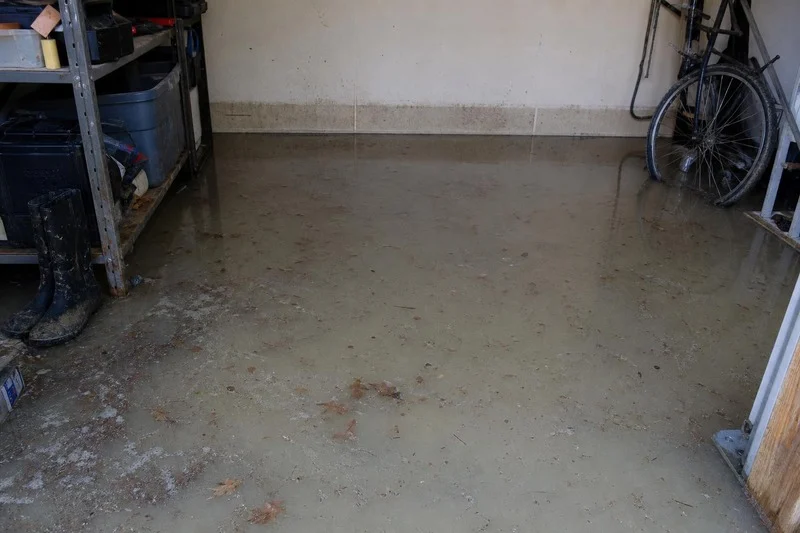
Getting Flood Water Off Your Floor Starts at the High-Water Line
That line is evidence and extraction destroys it, so we walk every wet room before the wand starts. We mark the top of the stain on each wall the water crossed and photograph it for your claim.
Once the floor dries nobody can recover that height, so we document the line before extraction begins.
Then we pull water, and our hose runs from a truck-mounted unit at the curb to the deepest point. We work back out toward the door, so nobody treads water into flooring we have already cleared.
Hard Floors First, Then the Carpet and Pad
On tile and vinyl we squeegee toward the wand, and on carpet we lift the covering back first. We cut the carpet pad away in lengths and carry it out, because ground water finishes a pad.
We run extraction and removal side by side on a flood job rather than one behind the other. Water that crossed soil keeps releasing sediment, so we extract in one room while we cut in the next.
Say the word flood when you call and we load differently: more hose, more bags, more cutting gear.
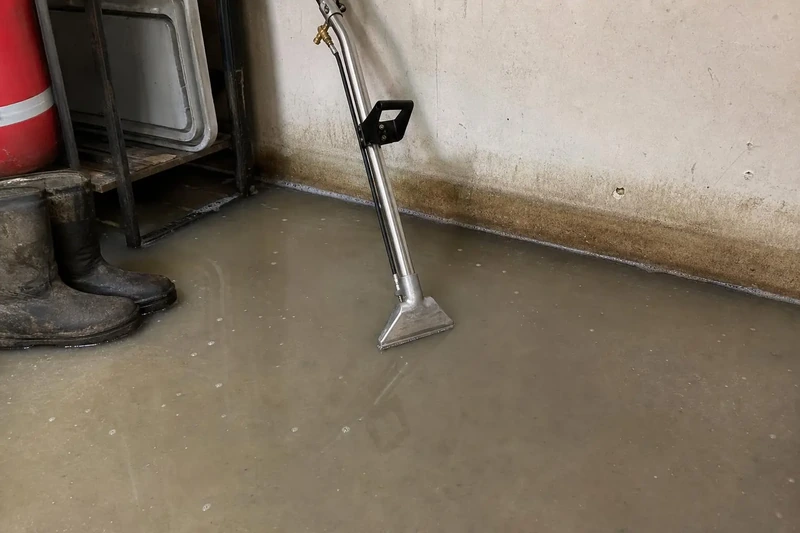
Outside Water Does Not Dry Back to Clean
Water that arrived from outside came in dirty and stays dirty, so we sort your materials on that fact. How the water looks tells us nothing, and hard structure we clean and dry where it sits.
Porous material that absorbed it leaves the building, because nobody can wash the inside of a carpet pad.
We judge how contaminated the water is on site, and not every flood lands at the worst end. Runoff off a lawn is one thing, and water standing two days in a warm room is another.
Framing, concrete and most hard flooring dry out and stay where they are. Everything in the list below drank the water and leaves your building.
- The carpet pad absorbed ground water, and nobody can wash that sediment back out of the fibers.
- Wet insulation holds the same dirt inside the wall cavity, where no air mover will ever reach it.
- Particle board at the bottom of a cabinet run swells the moment it wets, and it stays swollen.
- Cardboard boxes stacked on the floor wick the water upward and hold it against your baseboard for days.
- Glued-down flooring lifts and cups once water gets underneath, and the subfloor beneath it takes the water next.
We would rather tell you that on the first visit than four days later, when the list is longer.
We Cut Above the Wet Line, Never at It
Drywall wicks, so water stops at one height on your floor and then climbs higher inside the sheet. A cut made level with the waterline seals wet gypsum back into your wall where nobody sees it.
We measure up from the mark we made and cut a straight line above it, never at it. That is the flood cut, and it takes a hand's width of extra gypsum rather than a guess.
Behind that cut we bag the saturated insulation, and we pull the tack strip and baseboard out with it.
Drying the Inside of the Wall
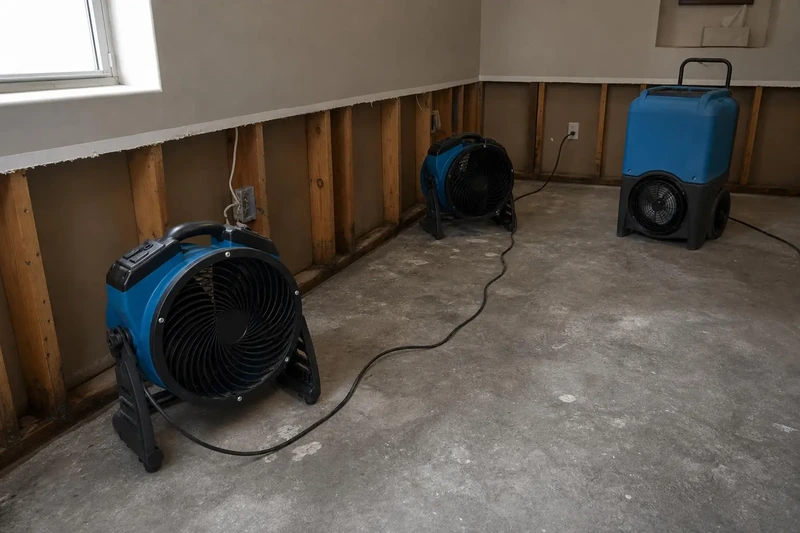
Then we open the stud bay and dry it, drilling weep holes low into the remaining gypsum. We aim air movers along the floor so moving air travels behind the surface instead of over it.
Dehumidifiers work beside them and strip the water back out of your room air continuously. Without them the wet rooms quietly soak the dry ones next door, and the job doubles in size.
We return and pull the equipment in tighter as the wet ground shrinks across your floor. The wall stays open until the material stops handing water back.
Once it reads dry and holds dry, the wall cavity is ready for whoever closes it up.
Tell Us If Water Is Still Coming In
Say that in the first minute, because it changes what we bring and when we start. Where the ground outside still feeds your building, we can pull water for hours and lose ground.
Line up a contractor for the grading and drainage outside while we work the inside, because that end is what finally shuts the water out. We remove what is already in your rooms, and we keep at it while the way in stays open.
We take these calls across the city, and Rose Park sends more of them than its size suggests. ZIP 84116 carries 58 NFIP flood claims, with losses running from 1978 to 2019, the most of any Salt Lake City ZIP. The Jordan River runs down that side of town, and the ground there takes water first.
None of that says your house floods, and it does not predict a thing about your address. It says water on that ground has somewhere to go, and every spring it goes there.
The state flood hazard viewer maps the modeled zones across Salt Lake County under your own address. The National Weather Service winter safety pages cover the storm, which is a separate problem entirely.
Call (801) 903-2904 and say where the water got in and how long it has been standing. Outside water pays no attention to a city boundary, so we answer it in West Valley City too. Our crews run the identical job out in Magna, off the same trucks and the same schedule.
An Hour of Standing Water Changes What a Flood Cleanup Costs
We size your job by how far the water traveled and what it absorbed on the way. We never size it by how deep it looked standing, because depth is the least of it.
A skim across tile that we lifted before it worked into the grout stays a genuinely small job. The same water left overnight climbs into the drywall, runs under a glued-down floor and reaches the subfloor.
Every hour moves more of your material from cleanable to disposable, and that is the cost curve. What leaves the building is what makes a flood damage cleanup grow, never the square footage alone.
What to Tell Us on the Phone
We put a number on your job after we have walked your rooms and not one minute before. Three things on the call tell us exactly what to load before a truck leaves the yard.
- Name the room the water reached, and name the door or window it came in through.
- Tell us how many hours the water has been standing there on your floor.
- Say whether the floor is tile, carpet, or something glued down to the slab.
Give us those three and we load the truck once, then get straight to work on arrival.
Start Your Flood Restoration With One Call
Water that came in from outside brings sediment with it wherever it ends up in your building. That is what separates this work from a burst pipe upstairs, and the room does not change who you call.
A basement holding it is flooded basement cleanup, whatever put it there, and it runs off the same number.
We set the whole sequence out, from the first length of hose to the last dehumidifier, under what water damage restoration involves. Some ground here takes water first, and we wrote up which parts of this valley flood and why.
Do not wait for it to drain away on its own, because it will not. We work anywhere in Salt Lake City, and your flood cleanup starts the moment you call (801) 903-2904.
Know This Before We Get There
We field these on the phone before a truck ever leaves the yard, and they come up weekly.
Snowmelt, and ground that cannot absorb another drop of it after a wet winter. Frozen or saturated soil sheds water rather than taking it in, so the melt travels across the surface. It runs off the Wasatch and off your own yard until it finds the lowest opening in your building.
That opening is usually a window well, a stairwell drain that cannot keep up, or a utility penetration. Outside water carries dirt in with it, and the material it saturates never comes back clean.
As long as the material still hands water back, which on a flood job usually means days rather than hours. Our crews return, check the material, and reposition or remove units as individual rooms recover.
A fan aimed at water still standing on a floor simply relocates it inside your building. We remove the water mechanically first, and only then do we run the air across it.
Left alone, longer than your building can afford, and on a flood it is the wrong question. Water sitting on a floor does not really dry, it saturates pad, gypsum and cabinet bottoms.
It then evaporates back into rooms that were undamaged, which is how a small job becomes a large one. We extract it in one visit instead, and every hour of waiting turns cleaning into removal.
Until the wet material reads the same as material elsewhere in your building that the water never reached. We settle that with a moisture meter in the room and never off a calendar.
A dehumidifier only earns its keep in a closed room, so we shut the windows and seal the zone. After a flood it usually runs for several days, because the water went into pad, gypsum and cabinet bottoms.
Not with a mop, and not with a shop vac once there is any depth to it. We run hose off a truck-mounted unit and squeegee the hard surfaces toward the wand.
We lift the carpet so the pad underneath comes away and leaves your building entirely. This water arrived contaminated, so we bag the porous material and clean only the hard surfaces it touched.
One Number Reaches the Whole Crew
The line rings through to a person at 3 a.m. exactly as it does at noon. Call Water Damage Restoration Salt Lake City and you hear an honest arrival time, not a script.
Leave the Water Line Alone and Call Us
Outside water leaves a silt line on your wall and sediment in everything porous it touched. Call (801) 903-2904 before that line dries, because we photograph it for your claim on the first trip.