
Smoke Damage Restoration Salt Lake City, UT
Check the top of a door casing and see what comes off on your finger. Smoke went where the air went, so the soot is in rooms the fire never reached, and our crews answer around the clock.
The fire is out and your rooms have gone gray. Run a finger along the top of a door casing and it comes back loaded.
The odor gets stronger as the house warms up, and it is worst in the rooms where nothing burned at all.
Soot is a solid deposit rather than an odor, and smoke carries that deposit on moving air. So the residue settled where the air traveled and not where the heat went.
We do smoke damage restoration in Salt Lake City, and we begin by removing the deposit from your surfaces. Call (801) 903-2904 and a person picks up whatever the hour.
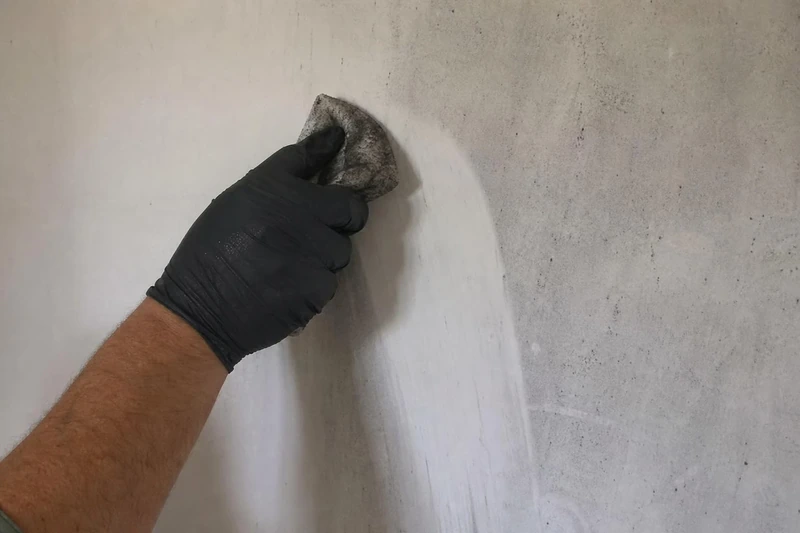
Dry Soot Removal Comes First on Every Smoke Damage Job
We remove the residue dry first, and neither tool we begin with presses soot into your finish. A dry sponge and a HEPA vacuum lift the loose deposit off painted drywall, trim and ceilings.
Wet cleaning follows once nothing is left loose to smear. Run that order backwards and you grind the soot into the paint permanently, so dry before wet is the whole game on a smoke job.
- Dry sponge first. We drag it across painted walls, trim and ceilings to lift the loose deposit off them.
- HEPA vacuum, never a household one. A home vacuum blows the finest soot particles straight back into your room.
- Wet cleaning last. We only wet a surface once the dry work has removed the smearing material from it.
We Work Top Down in Every Room
Direction matters as much as order, so we clean ceilings first, then walls, then trim, then floors. Nothing we have already finished catches what runs off the surface above it.
Corners, the tops of door casings and the ledges nobody dusts carry the heaviest deposit in the room. We clean those surfaces before we touch the open wall faces.
What Burned Decides Which Product We Reach For
No single cleaner covers a whole building, because the chemistry of the residue changes with the fuel that created it. A kitchen grease fire leaves a thin amber film you can barely see, and it turns rancid.
A fast paper fire on the same wall leaves a dry powdery deposit instead. A smoldering couch full of foam and plastic leaves something oilier and blacker that smears at a touch.
So we test a small patch on each surface type before committing to a method across the room.
Some Surfaces Will Not Clean Back, and We Seal Those
Raw wood, bare masonry and old porous plaster hold the deposit below the surface, where no amount of careful cleaning reaches it.
Where cleaning stops short we seal what remains, so the surface stops feeding odor into the air. Once that seal is on, the finish work belongs to a painting contractor and we hand the room over at that line.
Smoke Went Where the Air Went, Not Where the Fire Was
The map of your smoke damage is not the map of your fire. Air carried the residue up stairwells, over the tops of doors and into closets that stayed shut the whole time.
A room on another floor often reads dirtier than the room the fire started in. So our first job on site is drawing that boundary before anybody opens a bucket.
We drag a white cloth and a dry sponge across surfaces at several heights in several rooms. That is how we call a room dirty or clean, and the air path is the map we work from.
- Closets that stayed shut. Air still moved through the gap under the door and left a film on the shelves.
- The tops of door casings. That ledge catches the heaviest deposit in a room and nobody ever wipes it.
- A wall cavity open to a return. Soot pulls in behind a switch plate and settles inside the framing.
- Upholstery and mattresses. Soft goods drew the residue deep into the padding and are still holding it.
- Folded laundry and hanging clothes. Anything with a nap took the smoke the same way a couch cushion did.
We handle soft contents piece by piece, cleaning some of it in the room where it sits. The remainder we box, catalog and clean off site, then deliver back.
None of that belongs to the fire itself. Burned material, a structure that took heat, and the water a fire crew put down make a different job, so we run fire damage cleanup as its own service.
Your Ducts Move Soot Into Rooms Nothing Happened In
Your heating and cooling system moves whatever is in the air, so we treat the air path as a room of its own. If the blower ran during the fire or after it, that system pulled residue in through the returns.
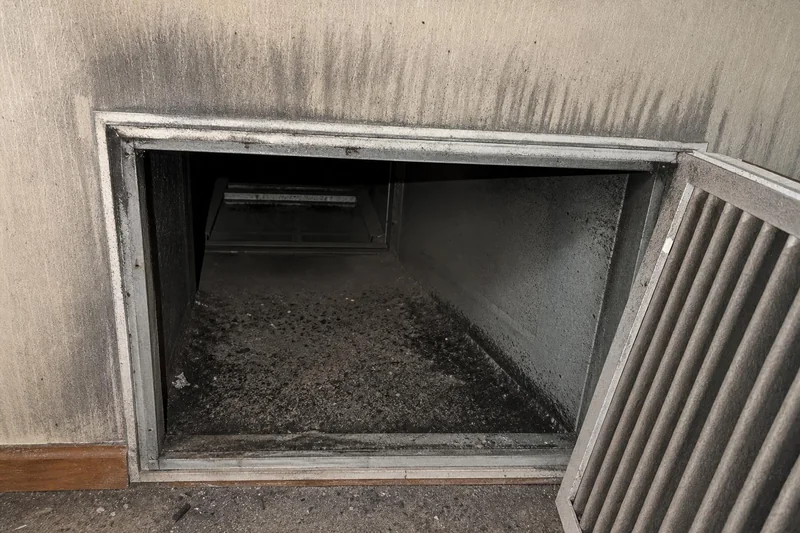
Then it pushed the same residue back out of every supply register in the building. So we open the return and examine the soot banked against the filter panel.
When Your Ducts Need Cleaning and When They Do Not
We do not clean duct on every job. EPA sets the conditions at visible growth inside hard-surface duct, at vermin, and at debris heavy enough to come out into the room.
Smoke on its own is not one of those conditions. Sooty grilles, black fanning above a supply and a filter loaded solid are what move duct work from optional to necessary. We open the plenum as well, because the heaviest deposit settles inside that box first.
Wet Insulated Duct Comes Out, and an HVAC Contractor Replaces It
Insulated duct that has taken on water is a different answer. EPA's position is plain: nobody cleans a wet lining back to good, so that run comes out of the building.
Replacing it is an HVAC contractor's job rather than a cleaning job. Arrange for one to examine your insulated runs while we work your surfaces and the hard duct, because the two jobs never have to wait on each other.
We Take the Odor Off Your Surfaces Instead of Airing the Room Out
The odor is not floating in your air waiting to blow out a window. Smoke pushes its volatile part into paint, plaster, carpet, upholstery and every porous thing in the room.
Those surfaces then release it back into the air for weeks after the visible cleaning ends. Warm the building up and they release far more of it.
That is why the fan and the plug-in purifier never fixed it for you. Odor is a physical deposit you can remove from a surface, and that is the part most people misunderstand.
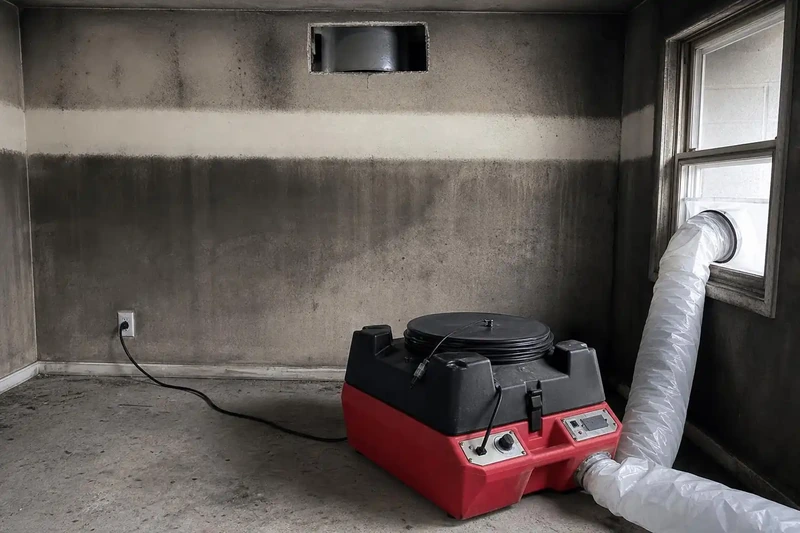
We deodorize by taking the source off the material, and everything else we operate supports that removal. Our air scrubbers use HEPA filtration, which captures at least 99.97% of particles at 0.3 microns.
Material we knock loose leaves the room instead of resettling on the work we already finished. No filter removes the odor, though, because odor is a gas and a filter captures particles.
The Order We Run Odor Work In
We run odor work in one order every time, because each step decides what the following step has to handle.
- The material leaves first. We carry out anything holding residue that will not clean back to a usable finish.
- Then we clean what stayed. Dry removal on every surface, then wet cleaning wherever the surface will accept it.
- Then we seal what will not clean. A coat of sealer stops a porous surface from feeding the room.
- The air goes last. Scrubbers capture what our cleaning knocks loose, and they were never the remedy by themselves.
We re-check the odor after we shut the building up and let it warm, because that is when the surfaces give the most back. Call (801) 903-2904 and tell us which rooms smell worst and what was burning.
Tell Us What Burned and How Far It Traveled
The residue makes one smoke job bigger than another, and the fire itself does not. We walk the building and count the rooms carrying deposit, the surface types inside them, and whether your ducts took any of it.
Elapsed time counts too, because residue left sitting keeps working into the finish underneath it. By the second week a light film on painted trim has set into the coating.
One more thing enlarges the job: somebody has often attacked a dry sooty wall with a wet cloth already, so the residue now sits inside the paint and the sequence begins further back.
We will not size your building off a description, because the same fire in two houses makes two different jobs. Call us, describe the rooms, and we will tell you where to start.
We Work Any Sooty Building in Salt Lake City the Same Way
A Central City apartment on 84102 and a house up the hill from Parleys Creek get the same sequence from us. The residue behaves the same way in both, so describe what you are looking at and we will tell you which equipment we bring.
Residue travels on air, and air pays no regard to a municipal boundary. Our crews run out to Millcreek and South Salt Lake just as often, and each of those cities has its own page for the water side of what we do.
Water is the busier half of this phone. You can see how our crews handle water damage restoration jobs off the same number.
Sometimes the smoke arrived from outside the building. The outdoor picture sits with AirNow, and what it left on your window sills and your upholstery is still ours to remove. Haze that drifted in loads the same porous surfaces a kitchen fire does, so the order of the cleaning never changes.
The Utah Department of Environmental Quality's indoor air quality pages are a fair read on what ends up in the air inside a building. Salt Lake County is the ground our crews cover. Call (801) 903-2904, say which rooms smell and what was burning, and we bring the method your surfaces need.
Read These Before You Scrub Anything
Nothing below beats dragging a dry sponge across your own wall and seeing what comes off it. Bring the rest to us on the phone.
No, and it fails in two separate ways. The soot underneath is the source of the odor, and it keeps releasing straight through a coat of paint. The coating will also not stay put, because soot is greasy, ordinary paint does not bond to it, and the staining bleeds back through on the worst areas. The order that works is dry removal, then wet cleaning, then a sealer only where a surface will not clean back. A painting contractor works last, over a wall we have already cleaned and sealed.
Smoke and soot from a fire is a standard part of what most home policies respond to, but the answer for your building sits with your carrier and the policy you hold. Your building and the belongings inside it fall under different parts of a policy, which is why we scope and list contents separately from surfaces. Photographs come before anything moves, because your own record is what an adjuster works from. We write down what we find and we keep our notes in a form an adjuster can use.
We answer that with what drives it, because a number typed out from a description is a guess. The rooms carrying residue, the surface types inside them, the distance the air path pushed the deposit, your heating and cooling system, and the hours the residue sat all set the size. Contents add a sixth driver, because we handle soft items piece by piece. A grease film across one kitchen ceiling and a whole-house puffback through every register are not the same job. Call (801) 903-2904, describe the rooms, and we will tell you what we would need to look at.
Most of it recovers, on the residue and odor side. Hard non-porous surfaces clean up well: glass, metal, sealed tile, and painted drywall we cleaned dry before anything wet touched it. The difficult cases are porous, because those materials absorbed the volatile part of the smoke. Some upholstery, mattresses, paper and raw wood do not recover, and we say so rather than charge you to clean them twice.
We do not hand out a date before somebody has walked the building. What moves it is the number of rooms carrying residue, how many surface types are in them, whether contents have to leave the building, and whether the residue reached your ducts. Odor usually decides the finish, rather than the visible cleaning. We shut the building up, let it warm, then re-check the rooms that smelled worst, because that is when the surfaces give the most back. If a room returns smelling, we work it again.
One Number Reaches the Whole Crew
The line rings through to a person at 3 a.m. exactly as it does at noon. Call Water Damage Restoration Salt Lake City and you hear an honest arrival time, not a script.
Which Rooms Still Smell Like Smoke?
Soot comes off dry before anything wet touches your walls, and the odor leaves with the residue rather than through an open window. Call (801) 903-2904 and we start on the surfaces carrying the most of it.