
Fire Damage Restoration Salt Lake City, UT
Keep everybody out of the building until the fire department releases it. Firefighting water is already under the burned material and running into rooms the flames never got to.
Stay out of the building until the fire department hands it back to you. Call us from the driveway while you wait.
We carry the burned material off your floor first, then pull the suppression water out from under it. That order is not a preference, because the water sits beneath the debris and nothing reaches it until the debris moves.
The flames are finished, but the water the fire crews put in to finish them is not. It is already somewhere you have not looked.
We answer this line at any hour, and on a fire call our first job is not the black on your walls. It is the wet.
Firefighters push far more water into a burning room than anybody pictures. That water now sits under the fallen material and runs down through the floor into whatever is below it.
Call (801) 903-2904, tell us what burned, and tell us whether anybody has released the building yet. We plan the first visit off those two answers.
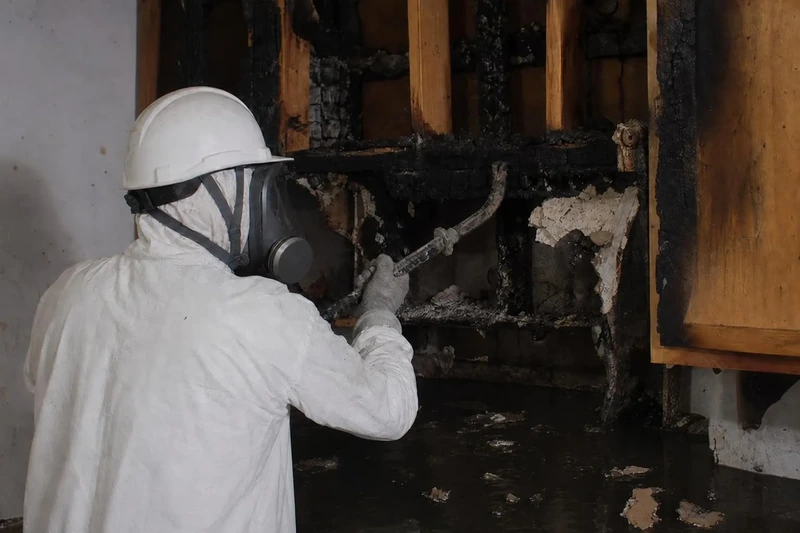
We Clear the Burned Material First, Then Pump the Water Underneath It
Our first pass through a fire building is a removal pass. We carry the fallen and burned material off the wet floor and out your door, because the water is underneath all of it.
Debris First, Then the Extractor
Dragging a wand across a floor buried in char only moves the char around, and the water stays exactly where it was. The carpet pad under it keeps drinking the whole time.
So we shovel and haul before we run a machine. We work out of the room that burned and follow the water down. On hard floors we run the wand, and we drop a pump wherever the water has pooled deep enough to earn one.
Where the ceiling below has taken the water, we open that ceiling so the water lying on top of the drywall has somewhere to go. Left shut, it hangs over the joists and waits.
What Leaves on the Same Trip
Whatever soaked and cannot come back goes out with the burned material. Carpet pad, wet insulation and the soaked backing behind base cabinets all go into bags and out to the curb.
A fire building holds two loads at once, and we would rather move both than come back for the second one. Your floor is easier to work the day it is clear.
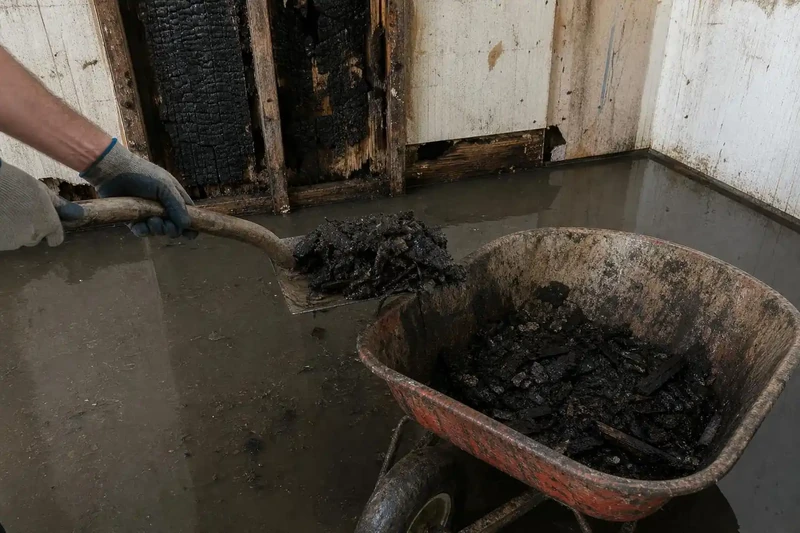
Fire Damage Cleanup Follows the Water Into Every Room Below
Water goes down first and sideways second. The room under the fire takes it through ceiling penetrations, light boxes and the gaps around pipe runs.
The room beside it takes the water under the base of the wall, where nothing shows until a baseboard comes off. So we take the baseboard off.
We Read the Rooms Nobody Thinks to Check
We walk a moisture meter along the wall base of every room that touches the fire room. A stud bay reads wet long before the paint gives anything away.
We open the wall cavity where the meter tells us to open it, not where the char tells us to. Those two lines are rarely the same line.
We also check the subfloor from below whenever a basement or a crawl space lets us reach it. Suppression water pools on the underside of a floor and sits there.
Why the Water Under a Fire Is Not Clean Water
That water left the hydrant clean, and it stopped being clean on the way down through your building.
It ran through burned finishes, through whatever was stored in that room, and through the ceiling below, so we treat it as contaminated from the first bucket. We contain what we lift and carry it out with us.
We do not send it to the nearest drain, and that matters in a city with open water running through it like Red Butte Creek.
Debris off a burned building is not ordinary dust either. Public health guidance flags asbestos, arsenic and lead as things it can hold, which is why nobody sweeps a fire floor and nobody blows it around.
Soot also keeps working after the fire quits. The residue is corrosive and it conducts, so it damages what it lands on instead of merely dirtying it.
Wet soot is harder to clean than dry soot, because water carries the residue deep into porous material rather than leaving it on top. Porous just means anything with holes that can soak it up.
What burned decides what it left behind. A fast, hot fire drops a dry deposit that lifts off, and a slow smoldering one leaves an oily film that smears.
Soot on your surfaces and odor in your air are a job of their own, and we cover smoke damage restoration on a page written for that. One phone call reaches both, and where a building took water as well, we start with the water.
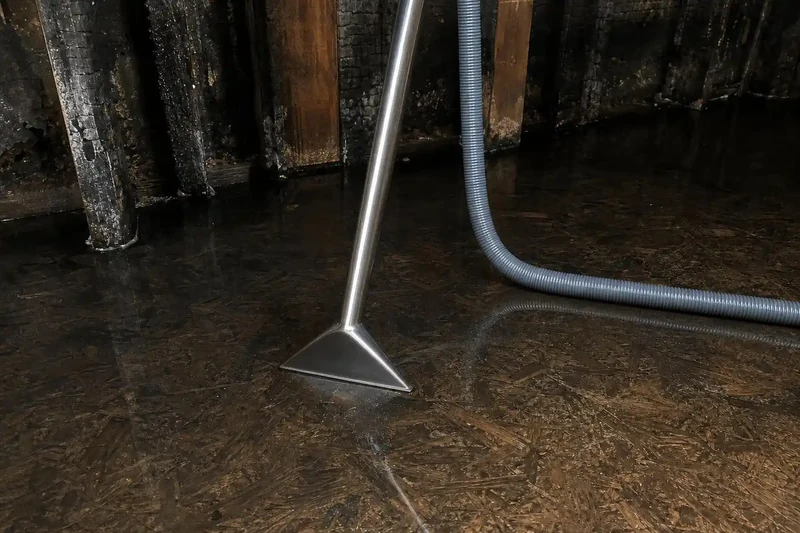
We Dry Every Room the Water Reached, Not Just the One That Burned
We set air movers low along the walls and into everything we opened. Our dehumidifiers then pull the moisture out of the air as the material releases it.
That is structural drying, which just means we dry the building itself and not only the surface it shows on. Wet framing and a wet subfloor take far longer than a wet floor looks like it should.
So we keep reading moisture content with a meter until the material we treated matches material the fire never reached. A meter is the only thing on the job that can tell us that.
Every machine also runs on your electricity for as long as it sits there. So we come back through and pull units out of the rooms that have finished. We do not leave the full set running until the slowest wall catches up.
Fire damage cleanup on a business runs the same sequence with one difference. On commercial fire damage restoration we order the rooms so the part of your operation that still works can keep working.
Suppression water behaves like any other water once it is inside a floor. That is why our fire calls and our everyday water damage restoration calls come off the same equipment list.
We Size Fire Restoration Work by What Has to Come Out
A photograph of a fire tells you almost nothing about what the job costs.
- Floor area that took heat or water, which sets how many rooms we work at once.
- The volume of burned material, because all of it moves before anything else can start.
- How far the suppression water traveled, counted in rooms under and beside the fire.
- How wide the residue spread, which decides how much surface we clean by hand.
- How much we can clean instead of haul, which is the salvage half of the job.
Two buildings with the same burned bedroom are two different jobs, so we give you the number once we have stood in your building. Nothing on this page is a quote.
Call (801) 903-2904 and say which room it started in. Tell us roughly how much water went in after it, and we will tell you what the first visit covers.
Do Not Put the Power Back On Yet
Fire residue conducts, so anything that took heat or smoke needs a qualified electrician to look at it before power goes back to it. Replacement is a real answer for some of it.
Do not plug the refrigerator back in to find out whether it survived. Three more things are worth doing while the building is still closed up. Photograph the rooms before anything moves, and keep every receipt you generate from here on. Talk to your adjuster before you sign anything with anybody, including us. And leave the walls alone while the building is still wet, because a wet cloth dragged through dry soot presses it into the paint.
Our fire crews log what we find and what we haul out, and your adjuster builds from that log.
Almost everybody tries scrubbing a wall, and that is the one move that costs the most. Tell us which rooms worry you most and leave the surfaces exactly where they are.
We Take Fire Calls Across Salt Lake County
Our crews take fire calls all over Salt Lake City and the rest of Salt Lake County. We run from Capitol Hill and the rest of ZIP 84103 out to the valley floor, and the order of the work does not change with the neighborhood.
Wait for the fire department to release the building before you go back inside. Fires come back from material still smoldering inside a wall, and a floor that took heat can give way under you.
The Utah State Fire Marshal is the state office for fire safety here. NFPA publishes the home fire safety guidance that most of those codes lean on.
Plenty of what we do never involved a flame at all. Over in West Valley City our crews pull water out of buildings that only ever had a broken supply line, and calls from Murray get the same treatment.
Call (801) 903-2904 and tell us whether anybody has handed the building back yet. We will tell you what happens on the first visit and in what order it happens.
We Will Tell You How Long It Takes and What Survives
Ask us anything that is not on this list when you call. (801) 903-2904 reaches a person whatever hour it is.
It runs in stages, and the stages set the calendar rather than the other way around. Nobody works inside until the fire department releases the building. Then we clear the burned material, then the water comes out, then the drying runs, and wet framing and a wet subfloor set how long that last stage takes. What stretches it is how much we have to carry out and how many rooms the water got into. We give you the sequence on the first visit and update it as rooms finish.
We clean most of what a fire touches instead of throwing it out, and that half of the job is ours. We clear the burned material, pull the firefighting water out, dry the structure, and take soot off the surfaces that can take cleaning. What burned through leaves with us, and so does what soaked past saving. Once your building is dry and clean, the finish work belongs to a different trade on a different schedule. We hand it over in a state that trade can start from.
Five drivers decide it, and nobody guesses any of them from a keyboard. The first is how much floor area took heat or water. The second is how much burned material has to come out before anything else can start.
Then comes how far the suppression water traveled and how many rooms it reached under and beside the fire. After that comes how wide the residue spread, and how much of what was in that room we can clean rather than carry out.
Call us, say which room it started in, and we will tell you what the first visit covers.
More comes through a fire than people expect when they first see the room. Framing, masonry and most hard surfaces come through heat and water and stay in the building. Textiles, upholstery and paper are the hard cases, and how long the residue has been sitting on them is part of what decides it.
We sort your belongings by what they are made of, not by which room they came out of. So a leather jacket, a cast iron pan and a box of documents get three different answers. Anything electrical goes to a qualified electrician before it goes near an outlet.
One Number Reaches the Whole Crew
The line rings through to a person at 3 a.m. exactly as it does at noon. Call Water Damage Restoration Salt Lake City and you hear an honest arrival time, not a script.
The Fire Is Over and the Water Is Not.
Describe the room the fire started in and say whether anybody has handed the building back yet, and we plan the first visit around those two answers. The line stays open around the clock.