
Sewage Cleanup Salt Lake City, UT
Sewage has come back up and it is sitting on your floor. We seal that room off, lift the water out and carry away the material it soaked, and somebody answers this phone at any hour.
Sewage has come back up inside your building and it is sitting on the floor. That water arrived contaminated, so it is not a mop job and it is not a wait-until-morning job.
Stop putting water into that line, and do not flush anything until a plumber has cleared it. Every gallon you send down there comes straight back into the same room.
Then call (801) 903-2904 and tell us what came up and how far it has spread. A person answers that number at any hour, and we start loading the truck while we talk.
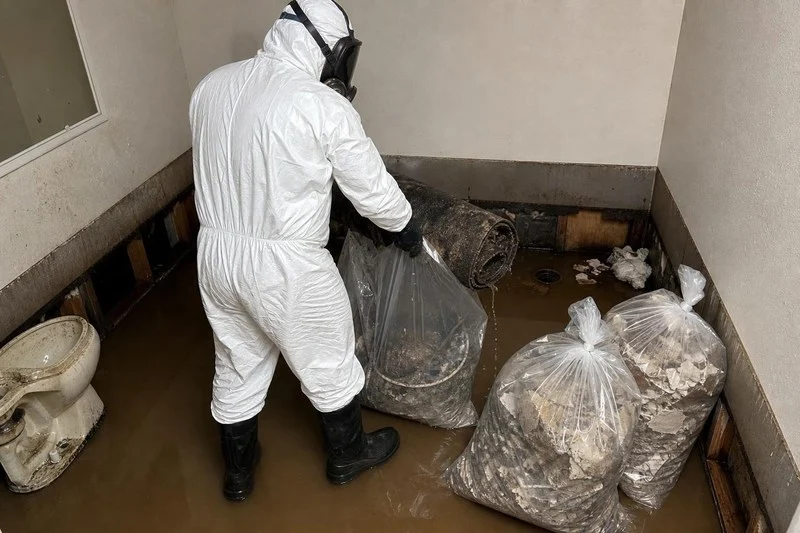
We Extract the Standing Sewage Water Behind a Sealed Doorway
Lifting that water is the whole job on day one, and everything after it runs faster or slower depending on how quickly your floor clears. So we set the room up for extraction before we touch anything else.
Containment Goes Up Before the Hose Comes In
We seal the doorway with poly sheeting and we cover the return vents, so the air in that room stays there. An air scrubber then pulls it through a HEPA filter the whole time our crew works.
Only then does a hose come in. Containment before extraction is the order we hold on every contaminated loss. Skip that step and you spread the problem into rooms that were perfectly fine an hour ago.
The Wand Does the Lifting, Not a Mop
We run a portable extractor on a job like this rather than dragging hose in from the curb. Long hose walks contaminated gear past every clean doorway you own, and each foot of it is one more surface somebody cleans later.
- Hard floors. We squeegee the water toward the wand and lift it off the tile or the slab in a pool.
- Carpet and pad. We float the carpet, cut the pad out in strips and carry it straight out your door.
- Floating floor or glued-down plank. The covering comes up so we can reach the water trapped underneath instead of guessing at it.
- Wall base. We pull the baseboard off first, so the water sitting in the wall cavity has somewhere to go.
Nobody walks a dry part of your building after standing in that room. Our crew keeps one path in and one path out, and every piece of gear stays inside the containment. That discipline is most of the difference between one wet room and four.
Clearing the blocked line itself is a plumber's job, and it can happen while we work rather than before we start. We take the water that came out, the material that soaked it up, and the surfaces it ran across.
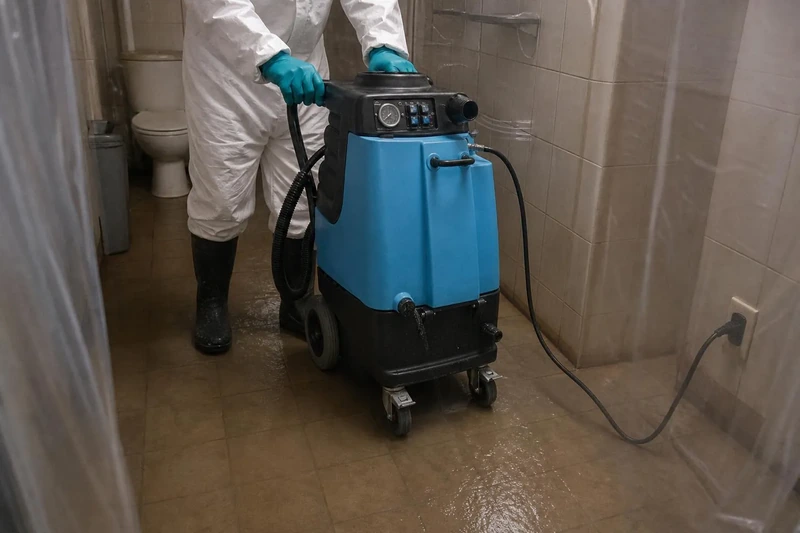
We Bag Everything a Sewage Backup Soaked Into
Sewage is Category 3 water, which the trade defines as grossly contaminated. That designation comes from the IICRC S500, the standard restoration crews work to. Plenty of people know it as black water instead.
Waste line backflow from past a trap lands in that category whatever it looks like coming out of the drain. What that means on your floor is short: anything porous that soaked it up leaves the building.
What Leaves the Building
Carpet and pad come out, and so does the wet drywall along with the insulation behind it. Particle board furniture, mattresses and the cardboard boxes sitting on the floor come out too.
All of those are sponges, and there is no honest version of this where we clean them in place and hand them back. We cut the drywall in a straight line above the water mark, and we take the baseboard off before the saw comes out.
What We Clean Instead of Carry Out
Tile, hardwood, framing and the slab underneath usually stay, and we clean, treat and dry all of it. Cutting the drywall high leaves the wall cavity open to the air, so the stud bay dries instead of holding water.
A wall that has to stay open stays open, and it goes back together on another trade's schedule once the material reads dry.
Nothing We Pull Out Goes Back Down Your Floor Drain
We settle the waste route before the wand ever touches your floor. Contaminated water leaves in the truck's own tank, and the porous material leaves bagged, out through the containment door.
- Not the floor drain. That is the shortcut that puts the same water back under the same slab an hour later.
- Not the yard. Rain and sprinklers move it right back toward the house you have just paid to clean.
- Not a storm grate. Salt Lake City has open water running through it, the Surplus Canal included, and none of that takes sewage.
The state rules covering where it does go sit with the Utah Division of Water Quality, and we work to them. The other option is moving your problem outdoors, which repairs nothing.
We Clean and Sanitize After the Soaked Material Is Gone
Spraying a room that still holds contaminated carpet accomplishes nothing at all, so we hold the same order every time. Seal the room, extract, carry out the material that soaked it up, then clean and treat the hard surfaces.
Cleaning always comes before any antimicrobial. A disinfectant is built for a hard surface that is already clean. So we wash the surface down first, then we treat what stays in the room.
We treat where the water actually went rather than the whole house, because finding the edge of it is the useful part of the work. We follow that line onto the slab, up the wall base and into every stud bay it reached.
We sort your contents the same way, and hard, washable items we can clean, treat and give back to you. Soft items that took contaminated water do not come back, and we photograph and log every piece before it moves.
We Put the Drying Equipment In Last, Never First
On a clean water loss we can extract and start drying in one visit, but a contaminated loss flips that. The cleanup has to finish before any air moves, or the equipment blows what was in the water around your house.
Once the room is clean, we set air movers along the base of the walls. We point them straight into the cavities we opened, so the material keeps giving up water instead of holding it. An LGR dehumidifier pulls that moisture out of the room and dumps it.
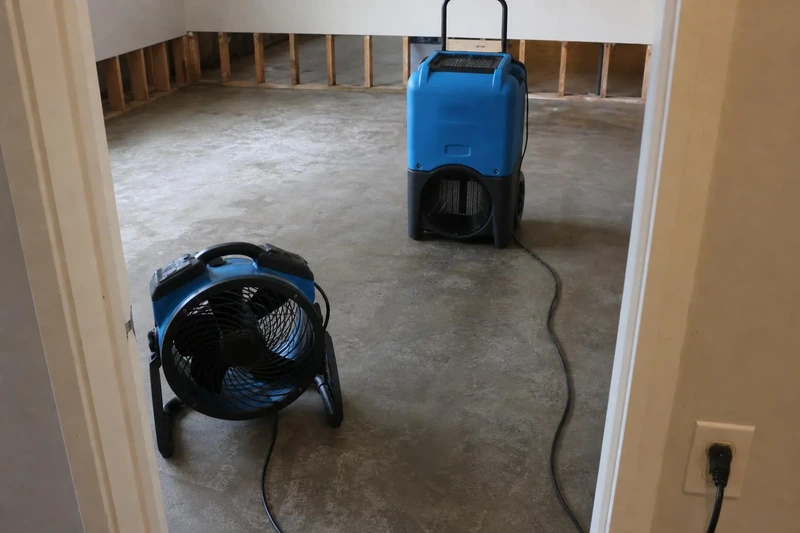
The air scrubber keeps running on HEPA the entire time. Soaked material gets 24 to 48 hours to dry out, and that number comes from federal guidance. That is why the first visit is worth far more than the third.
Why the Smell Is the Last Thing to Go
Odor is a symptom rather than the problem itself, and it fades as the material dries and as whatever held it leaves your building. If a smell hangs on after a room reads dry, something wet is still sitting in there.
That is worth a phone call rather than an air freshener from the supermarket.
How Far a Sewer Backup Got Under the Floor Decides What Leaves
We work out the size of the job from what has to leave your building, and it is never the depth in the doorway. It is the floor area that took water, the hours it sat, how far it got under the floor, and how much of what it touched is porous.
A backup caught inside the hour in one bathroom is a small job. The same backup found the next morning in a finished lower level is not, because by then it has slipped under the finished flooring and into the wall cavities.
So we scope it in the room, with the door open and the floor right in front of us. Tell us what came up and how many hours ago, and we will tell you what comes out first. Call (801) 903-2904.
Keep Everyone Out of That Room Until We Get There
Close the door on that room and keep people and pets on the other side of it. A handful of small moves help while we load the truck.
- Leave the furnace and the air conditioning off. If the return sits in that room, the system carries what is in the water everywhere else.
- Keep household fans off the wet floor. A box fan aimed at a contaminated floor puts whatever is in that water into the air.
- Stop using anything that drains. Laundry, the dishwasher and every flush go to the same place and come back to the same floor.
- Get a plumber onto the line. That is the one job that has to run alongside ours instead of waiting until after it.
- Wash up if you already walked through it. The CDC water emergency hub holds the federal guidance on hygiene after contact with sewage.
- Leave the wet material where it lies. Dragging a soaked rug through the house lays down a trail somebody has to clean twice.
A room that is still taking sewage is a room we would have to clean twice. That is why the blocked line matters more than the floor for the first hour.
ZIP 84104 belongs to Salt Lake City and to nowhere else, so a backup in Glendale means one utility and one set of records. We load the truck the same way out in Kearns, and that city keeps its own page for water damage restoration in Kearns.
When a backup ends up below grade, our page on flooded basement cleanup covers what changes down there. Where a call turns out clean rather than contaminated, we treat it as ordinary water damage restoration on this same number.
What We Tell Callers Who Just Found Sewage on the Floor
None of this replaces somebody standing in the room with you, but it is what we would say on the phone.
Work in one order: pull the soaked material out, clean the hard surfaces, then disinfect them. Disinfecting first is wasted work, because a product laid over soil never reaches what is sitting under it. Carpet, pad, drywall and insulation that took sewage leave the building, and you wear gloves, boots and eye protection for the rest of it.
Two separate jobs hide inside that question, and clearing the blockage is a plumber's work that follows the line and the access point. Our side is the water on your floor, and its size follows the area, the hours it sat and whether it reached the wall cavity.
The same four drivers set every one of these jobs. They are the floor area that took water, the hours it sat, how deep it went, and how contaminated it was on arrival. Depth means wall cavities and subfloor rather than surfaces, and that is where the material we bag out hides. So two rooms of identical size can turn into very different jobs.
No, and no household spray does the job. A consumer disinfectant is labeled for hard surfaces that are already clean, so it belongs at the end of a job rather than the start. It will not lift soil off a floor, and it does nothing at all for carpet or drywall that soaked up sewage.
It depends on your policy, and one line usually settles it. Home policies commonly cover water damage that is sudden and accidental, while treating a backup out of the sewer as a separate add-on. Check your declarations page for a water or sewer backup endorsement, and photograph the room before anything moves. We log and photograph what leaves and why, which is the part adjusters ask for.
There is no single number, and anybody who hands you one is guessing. Survival depends on the organism, the surface it landed on, the temperature and how long that surface stays damp. Porous material holds it far longer than glazed tile does, which is why none of this work waits it out.
Treat it as though it can, because sewage is grossly contaminated and carries agents that make people sick. That is why we seal the room off, why our crews work in protective gear, and why we do not try to save porous material. Keep children and pets out, do not eat or drink in there, and take any health question to a doctor rather than to us.
One Number Reaches the Whole Crew
The line rings through to a person at 3 a.m. exactly as it does at noon. Call Water Damage Restoration Salt Lake City and you hear an honest arrival time, not a script.
Shut That Door and Tell Us What Came Up
Nothing porous that took sewage goes back into your building, and nothing we lift out of that room goes down your floor drain. Call (801) 903-2904 and the containment comes with us.