
Water Damage Restoration Cottonwood Heights, UT
Where did the water sit longest? We cover Cottonwood Heights every day of the year, and we keep working the same square foot until the head stops pulling water. Call us and that is where we start.
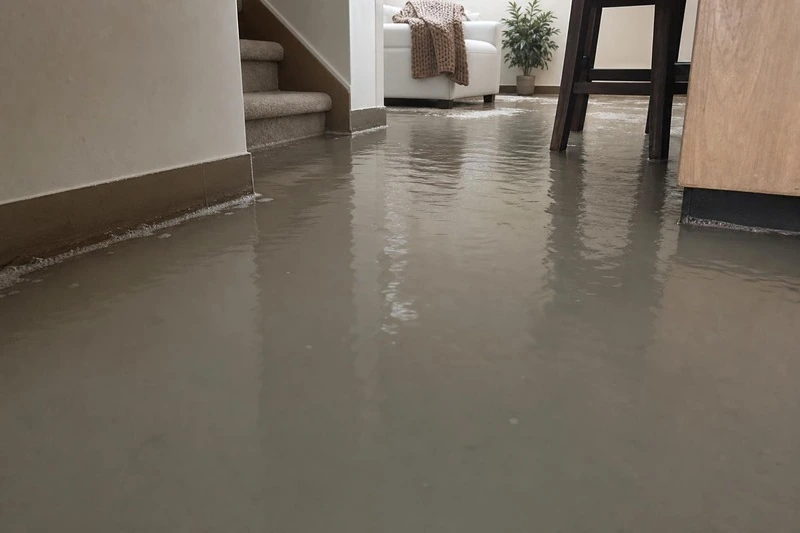
Extraction on a Cottonwood Heights Carpet Pad, Pass by Pass
Standing water is the easy part of this job. Most rooms we walk into have no free-standing depth left by the time we arrive. The carpet reads damp underfoot, and the pad below carries almost all of the remaining load.
A carpet pad holds several times what the carpet above it holds. It does not hand that back on a single pass. So we work a weighted extraction head across the floor in overlapping passes, crossing the same square foot repeatedly.
The pass count comes from the weight of what comes up, never from how the carpet looks. Passes keep going until the head stops producing water. Floors that seemed finished on the second pass have given up another two gallons on the fifth.
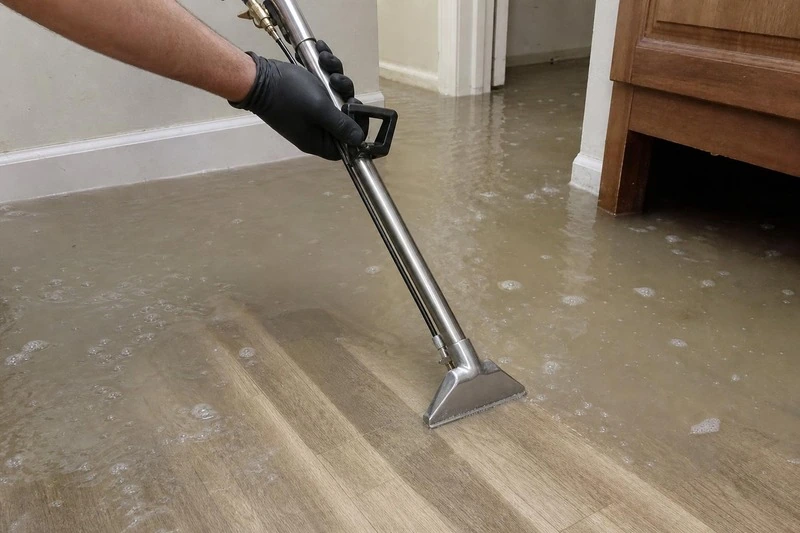
What we are pulling up matters as much as how much of it there is. Water out of a supply line and water that crossed a lawn make an identical wet floor underfoot, but they leave completely different rooms behind.
Why the Source Changes the Extraction
Clean water soaks a pad and can usually come back out of that pad. Water carrying yard dirt, sewage, or driveway grit soaks the same pad and stays in the backing. No number of passes rinses a pad that is already down on the floor.
So a dirty pad comes out on the first morning instead of getting dried twice. We lift the carpet, cut the pad into strips, and carry it out. The subfloor under it then dries in a fraction of the time.
Keeping the Dirty Part in One Room
Before any of that leaves, we seal the doorway off with plastic sheeting. An air scrubber runs inside that containment and filters everything on its way out. Grit we kick loose stays in the room we kicked it loose in.
Water still moving through a room changes the order. We take the water out first, and the sorting waits until the floor stops rising.
What Put the Water There in the First Place
Cottonwood Heights holds 13,098 housing units, and 9,297 of them are single-family detached houses. About 57.7 percent went up before 1980, and the 1970s alone account for 4,348 of them.
That stock decides which failures we see most. A house still on its first water heater and first supply lines fails in ways a subdivision finished last decade does not.
- Lines and tanks that let go indoors. A burst or frozen pipe, a water heater letting go under full pressure, a washing machine or dishwasher supply line, and a toilet or fixture overflow all land in the same place.
- Water arriving from underneath. A sump pump failure lets the pit overtop into the basement. A sewer or drain backup arrives through a lower-level fixture. Basement seepage or groundwater works in at the wall base after a wet stretch.
- Water arriving from above or outside. Meltwater sits behind an ice dam and eventually finds a way under the shingles. A roof leak reaches the same ceiling on a dry, warm week. Snowmelt or storm runoff rolls down a driveway into a window well.
- Outdoor water plumbed into the house. A sprinkler or irrigation backflow sends yard water back down the supply line, and a swamp cooler, the evaporative kind that sits on the roof, drips into the ceiling every season it runs.
The outside group is the one this city gives the most room to. Cottonwood Heights Public Works publishes a stormwater page on how runoff drains through the city, and that same drainage decides which lot takes water in a fast melt.
The Cause Tells Us What the Water Is Carrying
Every one of those routes drops a different water into the room. A supply line runs clean, a drain backup does not, and runoff falls between them depending on what it crossed. We sort a room by what came in with the water, not by the label on the failure.
Once that water settles into a finished lower level and stays there, the job is flooded basement cleanup.
Drying Out a Finished Basement in Cottonwood Heights
With the pad gone, the drying works on a bare subfloor instead of through a soaked layer. We float the carpet on air movers so air gets at both faces. The moisture those air movers raise has to land somewhere, so a dehumidifier takes it out of circulation.
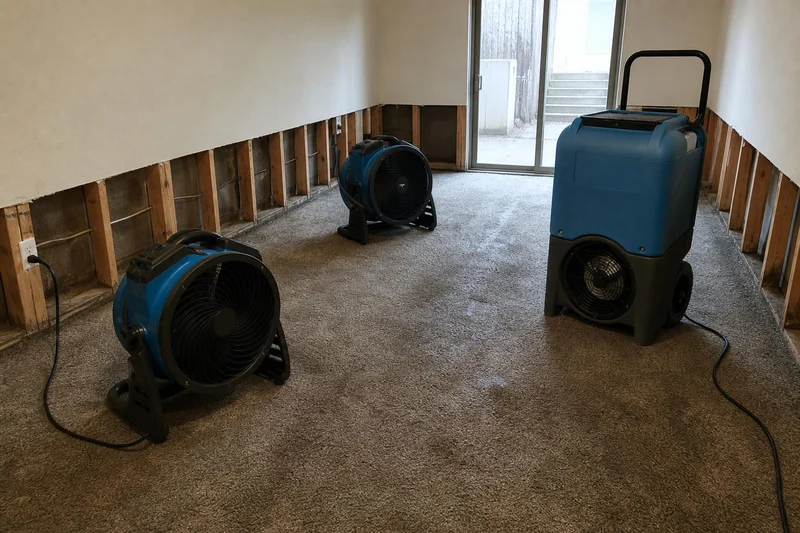
We flood cut drywall that wicked water up the wall, a straight line above the high water mark. Taking that strip out opens the wall base so the framing behind it dries too. The equipment then stays for days, not hours.
How We Know the Drying Is Done
We track the dehumidifier's daily volume, and the structure is finished once that number falls off and holds low for a full day. Pulling the gear early is how a wall comes back smelling wrong a month later.
What Stays and What Leaves the Building
Cottonwood Heights jobs all end at the same sorting question. The deciding factor is never how wet a thing got, but what soaked in alongside the water and whether the material can surrender it again.
- Carpet. It usually stays when the water ran clean and the extraction started before the backing came apart.
- The pad under it. It leaves whenever the water crossed open ground or came up out of a drain, because nothing rinses a pad in place.
- Pressed board sitting on the floor. Cabinet toe kicks, dresser bottoms, and the base of a bed frame swell within hours and stay that way.
Hard Floors and the Layer Underneath Them
A sealed hard floor over a dry subfloor often comes through the week fine. A floating floor over soaked underlayment does not, because that layer traps water the way a carpet pad does.
Your things follow the same rule as the flooring. We block soft furniture up off the floor early and bag whatever sat directly in dirty water. A record collection on a low shelf is the loss people feel, and it moves upstairs first.
Mold is a separate scope with its own rules, and it starts with an independent report rather than with us.
Where We Work in Cottonwood Heights
We cover both Cottonwood Heights ZIP codes, 84121 and 84093, and every street inside them. The city sits at 4,819 feet, which makes it the second-highest place we cover. The ground inside its own limits drops 465 feet, from Prospector Hills at 5,102 down to Bengal at 4,637.
That drop means water always has somewhere lower to be. When the National Weather Service forecast office in Salt Lake City posts a flash flood warning for this area, the low end of a sloped lot is where it shows up first. Willow Creek falls between the two at 5,016 feet, so all three have a lower street somewhere below them.
We reach this city on the same run that handles water damage restoration in Salt Lake City. Nearby jobs run into Holladay, Midvale, and Sandy. Everywhere else we drive is set out under service areas.
Wet Drywall Is Not Always Ruined Drywall
Often it can. Boards cup when the underside takes on more water than the face, and slow drying flattens much of that out. It becomes a loss once the water has broken the glue line or reached the subfloor. We would rather lift a board than judge the floor from the top.
No. Wet drywall is not automatically ruined drywall. Two things decide it: how long the sheet stayed wet, and what the water left in the paper facing. Clean water caught quickly often dries in place. Water that carried dirt soaks that paper with something it cannot give back.
We are not the right people to answer the health side of that. What we can tell you is what the smell means. Something down there is still wet, usually a pad, a subfloor, or the back of a baseboard. Covering the smell leaves the wet material sitting exactly where it is.
Call and describe what the floor looks like right now. We will tell you what we would pull out and what we would try to dry.
One Number Reaches the Whole Crew
The line rings through to a person at 3 a.m. exactly as it does at noon. Call Water Damage Restoration Salt Lake City and you hear an honest arrival time, not a script.
The Pad Holds More Than the Carpet Does.
Is the carpet still damp underfoot a day later? One call puts us on the road to Cottonwood Heights with a head that keeps passing until nothing more comes up.