
Mold Remediation Salt Lake City, UT
Mold is on your wall or behind it, and the fix is removal rather than paint. Call us with your independent report and we bring containment sized to it, or call before you have one and we will tell you where the sequence starts.
Open a moldy wall without containment and you push the problem into rooms that were clean. Growth that sat in one stud bay ends up in the air and on surfaces two rooms away.
What you can see is usually the small end of it. Mold feeds on the paper facing of drywall, on the back of a base cabinet, and on framing inside a wall cavity. None of that shows from the room you are standing in.
We do mold remediation in Salt Lake City, and we work to the scope an independent assessor already put in writing. Call (801) 903-2904 and read us that scope. We bring the containment and the filtration it calls for.
An independent assessor writes the scope first, and we carry out what it says. We put containment and negative air up before the first cut. We cut the moldy material out and carry it away in sealed bags, then we dry the water that fed it. We do not test, inspect, or assess mold.
If nobody has written a report for you yet, call anyway. We will tell you what has to happen before anybody opens a wall.
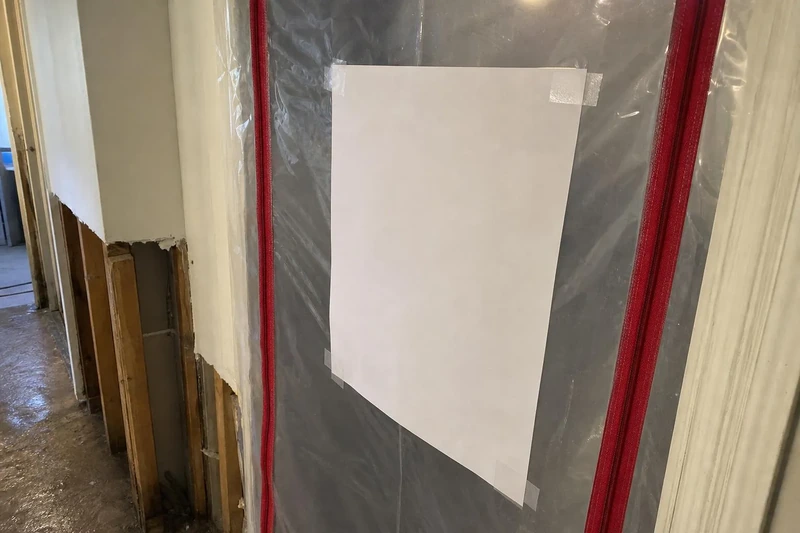
Mold Removal Means Taking the Material Out of Your Building
Mold removal is physical work, not a spray you put on the wall. We cut the affected material out, bag it inside the plastic, and carry it out of your building. We scrub the surfaces that stay, and that split matches the EPA guidance on cleaning up mold in a home.
Fogging a building is not remediation, and no spray reaches growth living inside paper-faced drywall. A mist settles on the surface, and the growth is behind the surface.
Containment and Negative Air Go Up Before the First Cut
We sheet the whole work area off in plastic before anything in it moves. Then we seal every supply and return register inside that plastic.
A running air handler has a duct feeding into every other room of your house. Cut beside a live return and you send the work area straight through those ducts. So we leave that system off in the zone for as long as it stays open.
We start the negative air machine before the first cut, never after it. We keep it running the whole time material is coming out, because that is when spores reach the air.
What Leaves the Building in the Bags
Porous material, meaning anything that soaks water up and holds it, does not clean out. The paper and the fibers are what the growth lives in, so we take them out. Sealed tile, glass, metal, and framing stay in place, and we scrub those instead.
- We cut paper-faced drywall back to the line your report sets, and we pull the wet insulation out behind it, stud bay by stud bay.
- Carpet pad soaks and holds, so we pull the pad instead of trying to clean it, and we lift the tack strip with it.
- Cabinet backing is thin board faced with paper, which is why growth runs the whole sheet, not just the stained corner.
- We close every bag inside the plastic, and we carry it out through the one zipped doorway, not back down your hallway.
That split is what moves the size of a job more than anything else does. It is also why your report reads in square feet and in depth.
We clean after the removal, never ahead of it. We run a HEPA vacuum over what stayed, wipe it down damp, and take the settled dust on the clean side too.
We put an antimicrobial on the cleaned surfaces last of all. Lay an antimicrobial over growth nobody removed and the growth stays exactly where it was.
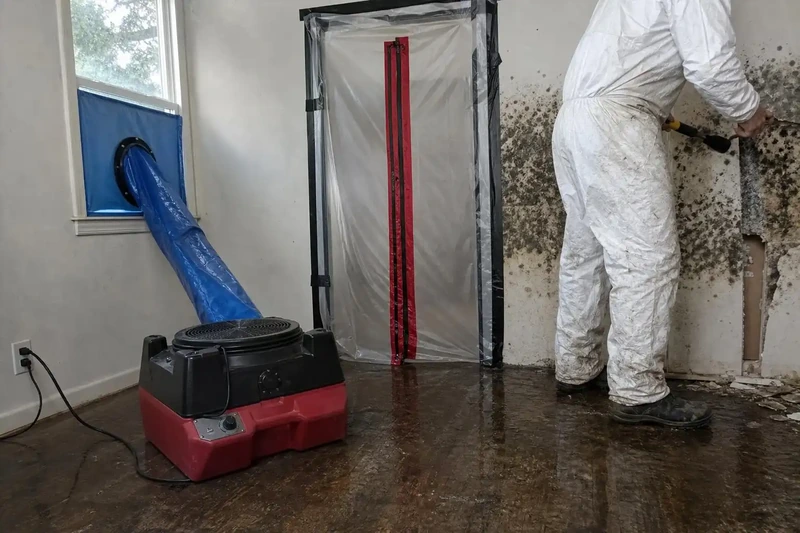
We Cut Nothing Until an Independent Report Says What Comes Out
Your job starts on paper, and the paper is not ours. You hire an independent mold assessor before we are involved at all. That assessor walks the building, maps how far the growth has run behind the wallboard, and writes the protocol.
The protocol names the rooms, the amount of material, the methods, and the standard the finished area has to meet. Everything we do waits on that document. We do not test, inspect, or assess mold.
Why the Assessor and the Remediator Stay Separate
The order exists for one reason. One party decides how much material comes out. A different party does the removing and takes the payment for it, and we are only ever that second party.
The choice of who writes your report stays with you, and we keep our hands off it. That is the part that makes the finished job checkable.
The same assessor who set the protocol walks the finished area afterward. That assessor measures our work against criteria written down before we started, so clearance is theirs to call. You end up holding a document you can hold the work to.
Our role has a name and a shape to it. We do containment, controlled removal, HEPA cleaning, and drying, all to a scope somebody else set. OSHA's brief guide to mold in the workplace sets out the containment and protective practice that work runs on.
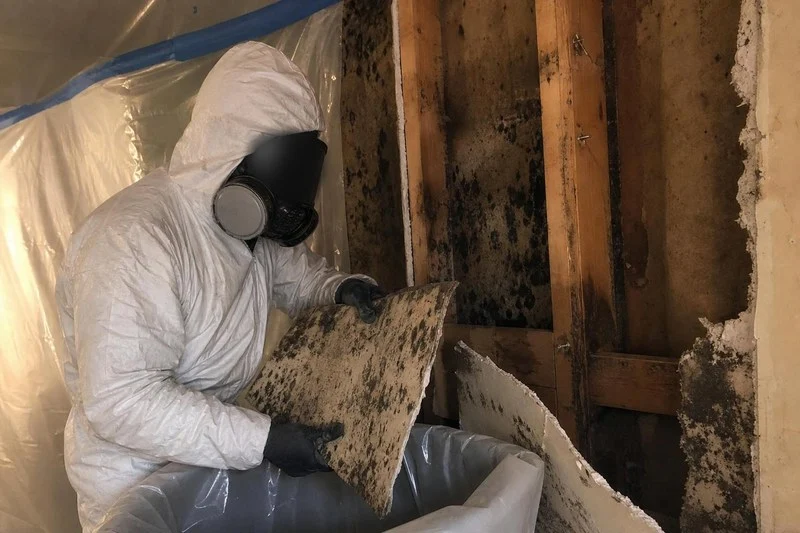
We Dry the Wall Cavity That Fed It, or It Grows Back
Removal without drying buys you a second visit. Growth needs water, so the drying is what makes the removal stick. We pull the moisture out of the framing and the cavity we opened, with the containment still standing.
If the leak behind it is still live, close the valve that feeds it before we come out. A bay we open with water still reaching it grows the same thing in the same place.
A Wall Cavity Holds Water Longer Than the Room Does
A wall cavity does not ventilate, because it is a closed box with insulation packed into it. It keeps the water from a slow supply leak long after the room in front of it feels normal.
Swamp coolers are a Utah water source on top of that. A cooler line weeping into a stud bay over one summer leaves growth nobody can see from the room.
Either way, the cavity gives that water up only when we put equipment on it. We set a dehumidifier inside the plastic and duct the negative air out through a window.
We read the bays with a moisture meter on a schedule, and a hygrometer tells us what the air inside the plastic holds. We come back to shift machines off the bays that read dry.
So we run the drying inside the same containment we removed under. Call (801) 903-2904 and read us what your report says about the moisture source. That answer changes what we load before we leave.
While the Containment Is Up, Your House Is Down a Room
Once we tape the sheeting and start the machine, that room is out of use. It stays that way until the assessor you hired signs it off. Plan around the room rather than around us.
- We work the whole job through one doorway, and it is the only way anything moves in or out, including us.
- We leave the air handler off in that zone, because a live return turns your ducts into a delivery route, room to room.
- We run the negative air machine day and night, since containment that runs part-time is not containment, whatever the plastic looks like.
- We leave the framing open at the end, so whoever closes that wall is boarding over material somebody read dry, and cleared.
Some of what is in there is not coming back out again. We take paper-faced drywall, insulation, carpet pad, and cabinet backing out of the building. The growth is living in the paper and the fibers.
It ends the way it began, on paperwork that is not ours. We dry the opened cavity, we HEPA clean, and we pull the plastic down. Then the assessor you hired walks the area against the protocol.
Call (801) 903-2904 with your report in front of you. We will tell you where in that order you currently sit.
Read Us the Scope, Whether It Says Mold Abatement or Cleanup
Reports use different words for the same job. Yours might head that section mold abatement, or mold cleanup, or mold remediation. The work inside the plastic does not change with the wording.
We take mold removal calls from every part of Salt Lake City, from Liberty Wells and the rest of 84115 out to the ground along Mill Creek. Calls from the rest of Salt Lake County come to the same phone.
We run commercial mold remediation on that same order. We bring a suite, a clinic, or a restaurant kitchen the same containment and filtration we bring to a house. Attic and crawl space jobs run that order too.
We answer the questions that are only about the dark growth under black mold removal. When water arrived first and the growth followed, start with the water damage restoration that comes before it. Water and mold calls out of Holladay reach the same number.
Call (801) 903-2904 and read us the scope out of your report. If nobody has written one yet, say what you are looking at and where it sits. We will tell you which step has to happen before we can quote any work.
What People Ask Before a Mold Job Starts
Six questions reach the phone before anything else does. Not one of them settles your job, because your report does that. Bring the rest to (801) 903-2904.
Yes, and your report is what turns it into a defined job. It names the material that comes out, and we take exactly that and nothing beyond it. We HEPA vacuum what stays, put an antimicrobial on last, and dry the water that fed it.
No average is worth repeating, because your report already holds every driver that matters. Look for the square footage inside the containment, how deep the growth runs, and how much absorbent material has to leave. The fourth is whether the leak behind it has actually stopped.
They name the same job from two ends. Removal is the physical part, and it is the half of this work that is genuinely ours. Remediation is the whole sequence around that. We run containment first, then negative air holding the room, removal inside the plastic, HEPA cleaning, an antimicrobial, and drying.
The complaint is fair wherever the party who writes the scope also takes the money for the removal. We keep those two apart on purpose. An independent assessor writes the scope before we are involved, and we carry out what that scope says. The same assessor walks the area afterward against criteria written down before we started.
Nothing in a spray bottle does it. Growth needs water, so the durable part is taking out the material it lives in. Then we dry the thing that wet it, and the wall stays dry after that. Bleach can lighten a stain on hard tile and does nothing to growth inside paper-faced drywall.
You can where the growth sits on something that does not soak, like sealed tile, glass, or painted metal. Paper-faced drywall is food for it, so wiping the face leaves what is behind it. Your report will call for that section to come out.
One Number Reaches the Whole Crew
The line rings through to a person at 3 a.m. exactly as it does at noon. Call Water Damage Restoration Salt Lake City and you hear an honest arrival time, not a script.
Do You Already Have the Assessor's Report?
No report yet? Call and we will tell you what to line up first, in the order it has to happen. If you are already holding one, read us the scope and we will size the containment and the filtration to it.