
Ice Dam Water Damage on the Wasatch Front
The leak comes through the ceiling, but it started at the roofline. If it has dripped inside, call us and we will dry it.
Why is water running down your ceiling when nothing has punched a hole through your roof?
An ice dam is doing it, and a ridge of ice has locked up the lower edge of your roof. The melt trapped behind that ridge has nowhere left to drain, so it backs up and comes inside the house.
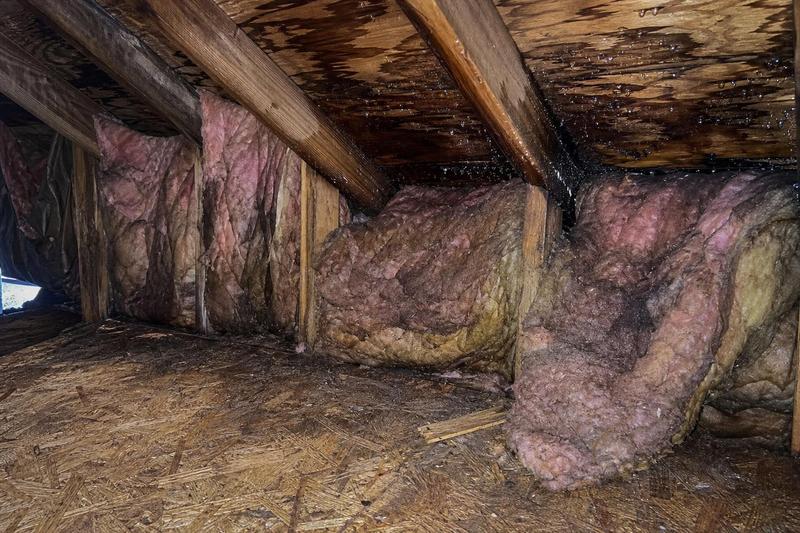
Ice dams sit behind a good share of the winter water damage restoration in Salt Lake City that our crews run. What an ice dam leaves is always indoors: a stained ceiling, drenched attic insulation, and drywall that has been drinking for days. That interior water is the part we handle, and it is the part this post covers.
Ice Builds at the Eave and Pushes the Melt Indoors
Snow up on the warmer part of the roof melts and slides down toward the eave. The eave stays colder because no heated room sits underneath it, so the water freezes right there. Each round of melting thickens that ridge until a shallow pond of meltwater stands behind it.
Water standing on a roof does not stay outside for very long. It creeps up under the bottom course of shingles, past the point anything up there can shed. From there it drips onto the top of your ceiling and soaks whatever it lands on.
Freeze and thaw trade places on a Wasatch Front roof for months at a stretch. Sunshine warms the roof deck through the middle of the day, even when the air stays below freezing. The temperature drops hard once the sun comes off that roof, and the melt locks up again.
A cold snap on the back of a mild afternoon grows the ridge faster than anything else does. The Wasatch Front's swing between those two states decides how much one storm ends up costing you. One storm sits on a roof all week and causes nothing, and the next one soaks a bedroom.
Attic Heat Is What Feeds an Ice Dam
Snow sitting on a genuinely cold roof does not melt, so something has to be warming that deck. The deck is warm because heat from the rooms below keeps escaping upward into the attic. An ice dam starts up there in the insulation and only finishes down at the gutter line.
Salt Lake City put up 11,846 housing units through the 1950s, then another 10,360 between 2010 and 2019. So attics across this city sit at completely different standards, sometimes on the same street. Somebody insulated plenty of them once, decades back, and nobody has lifted the hatch since.
Two things turn up in our winter calls over and over again, and both of them are ordinary. The first is a soffit vent packed shut with blown insulation somebody pushed too far into the corner. Cold outside air is supposed to wash the underside of that deck, and a blocked vent stops it.
The second is a bathroom fan that somebody ducted into the attic and never carried any further. Every shower sends a warm wet plume straight at the coldest part of the roof deck. Heat and moisture arrive together, which is about the worst combination that deck can get.
Warm Air Leaks Out of Your Ceiling and Into the Attic
Warm air leaves a house through every gap in the ceiling plane, and there are always gaps. Recessed light cans, the hatch into the attic, the hole somebody drilled to pull a wire through. Each one is small on its own, and together they lift enough heat to melt snow off the roof.
ENERGY STAR flags ice dams on a roof as a symptom of an attic that is under insulated and under vented. Its guide to spotting the problems worth fixing walks a homeowner through that diagnosis one step at a time.
The National Weather Service lays out the same chain of events on its page about preventing roof ice dams. That page also explains how the backed up water works its way beneath the shingles and into the structure. Sealing and venting an attic is its own trade, and that trade is what keeps the dam from coming back.
Venting work is for the next freeze, and it does nothing for a ceiling that is already wet. If water has come through, the clock started the moment the water did, and it is still running. Dial (801) 903-2904 and describe the ceiling to us: the color, the size, and whether it is still growing.
Ceilings Show the Damage Before Anyone Checks the Attic
A brown ring on a ceiling marks the end of the water's trip through the house. The water got in at the roof edge, ran along the top of the drywall, and pooled at a low spot. An ice dam ceiling leak often surfaces several feet away from the place the water actually entered.
That stain is late news, because the insulation above it was holding water long before any color came through the paint. The drywall over your head has been carrying wet weight it was never sized to carry. Our crews read a call like this off a short list of tells they see every winter.
- A stain with a hard rim, which says the water behind it has stopped moving for now.
- Paint bubbling low on a wall, which is water inside the wall cavity working its way back out.
- A ceiling that has started to belly downward in the middle of the room above the stain.
- A door that has swollen inside its frame until it will no longer latch properly.
- A closet or a corner that has picked up a shut-up smell it never carried before.
Salt Lake County hands us these calls in clusters, and the clusters land in winter. One valley storm can put several houses on the board for our crews in a single day. Every one of them shows the same brown ring in the same upstairs corner of the house.
Snow Melt Soaks a House, and We Dry It Out
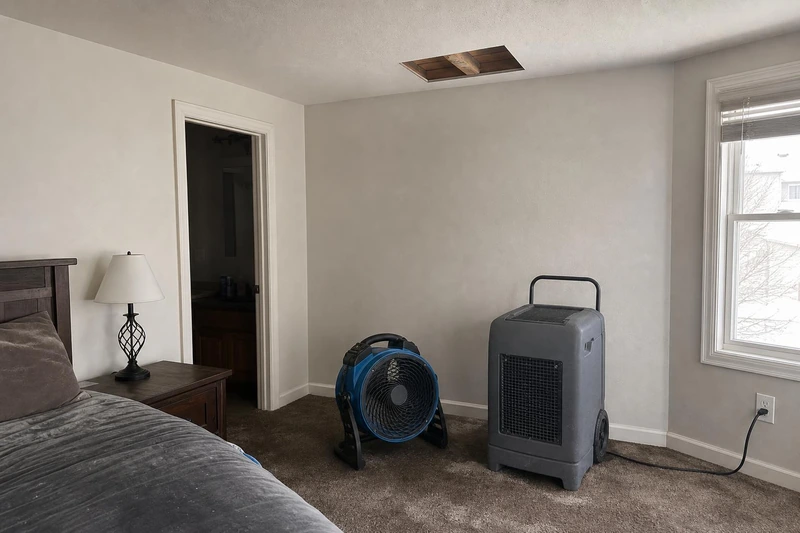
An ice dam lands its water high in the building, so our crews work their way downward. We lift whatever is standing on the floor first, because that is what keeps soaking into things. Then we open the ceiling where it sagged and haul out the insulation lying on top of it.
We handle that part as a removal job in its own right, and on an ice dam call the ceiling is what it saves. Soaked insulation will not dry where it lies, whatever anybody points at it. It leaves the house in bags, photographed on the way out so you have the record.
Then the air movers and dehumidifiers go in, aimed into the openings our crews just made. An air mover is not a dryer; its job is to strip the damp layer off a wet surface. That turns the water in your ceiling into water in the room, which is where the dehumidifiers earn their keep. They condense it and send it down a hose, so the house actually loses the water.
A Salt Lake City roof 4,223 feet up can thaw and lock again inside a single day. The first hours after a leak are when a ceiling is still worth saving. By day three the drywall has given up and the trim is coming off the wall with it.
Our main water damage page lists everything our crews take on after a leak. We cover Salt Lake City and the rest of the valley, and we answer the phone any hour. The day a stain shows up is the day to phone (801) 903-2904, before the drywall gives out.
Gutters Come Up Every Winter, and So Do These
Get the water and the wet material out of the building first, then dry what is left until it reads dry again. On an ice dam that means opening the ceiling, hauling out the soaked insulation, and running equipment into those openings. The dam itself stops forming once the heat stops leaking out of the house and into the attic.
There is no fixed number, because it turns on how deep the pond behind the dam gets. Water only has to find one seam, and once it does it can be on your ceiling within hours. From there it compounds, because insulation and drywall keep whatever they soak up. A ceiling that was savable in the first hours turns into a tear-out once it has carried that weight for days.
A roofer can clear the ice off the edge and look at how the roof itself is put together. What a roofer cannot do is dry the ceiling the melt has already come through, and that half is ours. The dam also keeps returning until somebody deals with the heat leaking into the attic, so that is the lasting fix. We take the water side: opening the ceiling, hauling out wet material, and drying what is left.
That one is between you and your carrier, and the wording of your policy is what decides it. Two carriers can look at a single ice dam loss and land in different places, so ask yours directly. Our part is the paper trail, and it starts before we touch anything. We shoot the damage, log every load that leaves the house, and keep the drying numbers day by day.
Low-pressure steam is the usual method, because it melts the ice out without tearing up the roof surface. Pulling the snow back off the lower roof takes away the material that feeds the next dam. Both of those are roofing calls, and neither one dries what has already reached your ceiling. That is the part our crews pick up, and it does not wait for the ice to be gone.
Ceiling Stains Spread Every Night It Freezes
Reach us on (801) 903-2904 and describe the stain. We answer any hour, and we dry the inside of the building.