
What to Do When Your Basement Floods in the Salt Lake Valley
Runoff finds the same basements every spring. When yours takes water, get us on the phone and we will bring the extraction gear.
A slow snowmelt does more damage to a basement than a burst supply line does in an hour. The water arrives quietly, it keeps arriving, and it soaks the bottom inch of everything sitting on the slab. Most people discover it after the carpet padding has already gone heavy.
Snowmelt water is an event, and events end. That is what makes it restoration work. We pull the water off your floor, we take out the material that will never dry, and we dry the structure that is left.
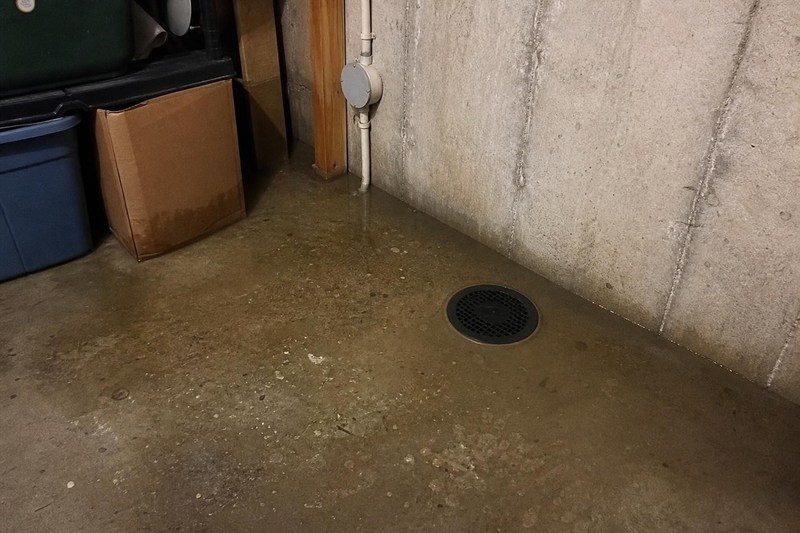
Snowpack Melts for Weeks, and Your Basement Feels All of It
Spring runoff is not a single flood. Salt Lake Valley snowpack releases a little at a time over several weeks, so the soil under your foundation stays saturated the whole while. A basement that shrugged off a heavy rain can still take water on day nine of a melt.
City Creek and Red Butte Creek both run hard while that happens. Every drainage off the range east of the city carries that meltwater down toward the Jordan River. Wasatch Front basements collect their spring water from underneath.
The USGS Utah Water Science Center operates the stream gages and groundwater wells that measure it. Their record shows how long the water keeps moving after the snow line climbs out of sight. Groundwater under the Salt Lake Valley answers to the whole winter, and it answers late.
Salt Lake City carries five separate flood zones, from the floodway itself out to the lower-risk ground behind a levee. Plenty of the basements we dry sit nowhere near any of them. Basement flooding during runoff ignores the flood map, and so does a plugged window well.
Frozen Ground Sends the Melt Straight at Your Foundation
Snowmelt only soaks away if the soil can take it in. Ground that is still frozen on top, or already saturated from last week's melting, cannot take any. The water travels across the surface and collects wherever your yard tips toward the building.
Salt Lake City sits at 4,223 feet on the valley floor, and every foot of mountain above it drains in this direction. Your lot catches a small share of that, and it keeps arriving day after day. A yard that drains fine in one afternoon has never been asked to move water for weeks on end.
So the ground beside your basement wall never gets a chance to dry out. The low corner of the yard turns into a shallow pond that refills every day the sun is out. You will notice the evidence indoors well before you work out the cause.
A dark line creeps up the drywall behind the baseboard. Paint bubbles low on the wall. A patch of carpet feels cold underfoot, and cold carpet is wet carpet.
Regrading a yard is a different contractor's job entirely. Once the water is gone and the basement is dry, ask a grading contractor or a foundation contractor to look at where the snowmelt collects. Our part is the water and the drying.
Window Wells Fill First, So Check Yours Before the Melt Starts
A window well is a bucket sunk against your foundation with a drain in the bottom. That drain plugs with leaves, gravel and sediment over a winter. Snowmelt fills the well faster than a plugged drain empties it, the level climbs past the frame, and the water comes in through the glass.
This is the failure we encounter most on homes that have never had a wet basement. Nothing broke. The well simply held water against a window nobody designed to hold any back.
A downspout that ends at the foundation delivers the same problem from above. It takes the snowmelt off half your roof and drops it two feet from the wall. Clearing that well and running the downspout out into the yard costs you an afternoon.
Do it while the snow is still on the ground. Once water is inside, clearing the well stops the next gallon and does nothing for the gallons in your carpet.
April Water Still Has to Come Off the Floor Fast
Pull the water out first. Standing water loads more material every minute it sits. Carpet, padding, drywall and particle board all soak it up, and what they soak up they hold long after the puddle is gone.
Salt Lake County has carried federal flood declarations dated April 1983 and April 2011. Both were runoff emergencies, and neither began with a broken pipe. Our basement calls cluster in spring, and the callers are rarely people who believed they lived somewhere that floods.
Before our crews arrive, handle three things:
- Keep your shoes on. A wet carpet edge hides the tack strip, and that strip is a row of nails.
- Leave the breaker panel alone if reaching it means standing in the water.
- Lift what matters to you off the slab and move it somewhere dry and high.
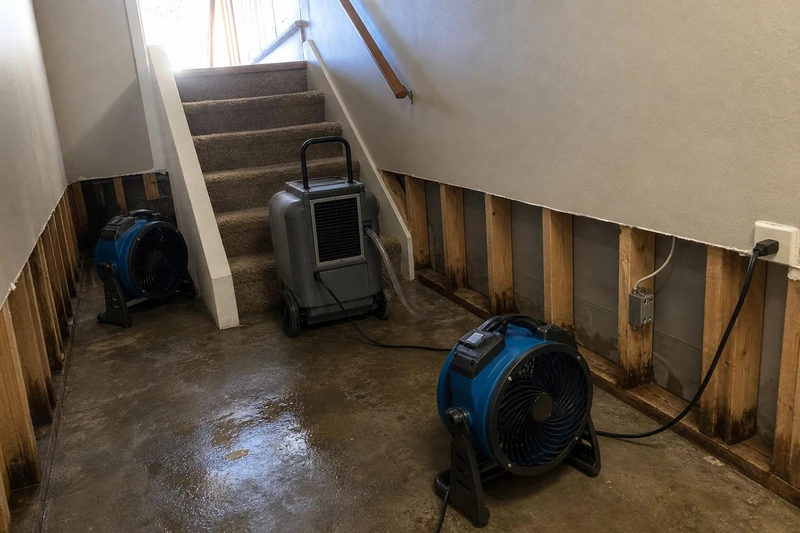
Then we begin. Our crews pull standing water with a weighted head in slow overlapping passes, and the padding comes out in cut strips. We squeegee hard flooring and extract it the same way. Where the wall took water, we cut the drywall in a straight line above the wet and leave the cavity open.
We photograph everything before it moves, and we itemize every piece of material we take out. Your insurance adjuster reads that file later. The daily moisture log goes in beside it.
That whole sequence is what flooded basement cleanup means on a snowmelt job. Dial (801) 903-2904 and we will name what is worth lifting out of that room while we drive over.
Sump Pumps Quit When the Runoff Never Stops
A pump sized for a thunderstorm is not sized for a month. During a long melt it cycles day and night for weeks, and the failures are unremarkable. A float sticks, a breaker trips, or the power drops for an hour and the pit tops over while the house is empty.
Have the pump examined by the contractor who installed it, once the basement is dry again. Our part starts with what came out of that pit and soaked into your floor.
Drying is the half of the project people underestimate. Air movers dry nothing by themselves. They strip the wet air off surfaces so evaporation keeps going, and dehumidifiers pull that moisture out of the room and discharge it.
A basement floor looks dry long before the material under it is dry. We take moisture readings at marked positions on every visit and compare them against material the water never reached. The equipment leaves when those measurements agree.
Living with that equipment is genuinely unpleasant. Air movers are loud and constant, and your basement stays warm and windy until the numbers land. People switch them off for the quiet, and every hour they sit idle is an hour added to the drying.
NOAA's river forecast center publishes the snowmelt runoff outlook for Utah's basins. That outlook tells you how many weeks the melt still has to run. Drying a basement while the ground outside keeps feeding it takes somebody watching the meter and never the calendar.
Runoff does not care that your house has stayed dry for years. If there is water on your basement floor, call us at (801) 903-2904, day or night, and start lifting what you can while you wait.
Our crews run water damage restoration through Salt Lake County. Cottonwood Heights and West Jordan sit on the same valley floor, and the same trucks answer there. For everything else we handle, start at the water damage work we run across the valley.
Timing Is What Most People Ask About
You pull the standing water out first, then remove the material that holds moisture, then run air and dehumidifiers until the structure reads dry. Our crews extract, pull wet padding and baseboard, and open the wall where it took water. The gear then runs until marked points match material the water never touched.
Drying ends when the moisture readings say the structure is dry, and on a snowmelt job those readings chase a moving target. The melt keeps feeding the ground beside your wall for weeks after water first shows up inside. The numbers can stall on any day the ground hands more back, and the equipment stays in until they hold. We give you the readings on every visit, because the readings are the honest answer.
Coverage turns on the route the water took into your basement. Homeowners policies usually pay for sudden accidental water that starts inside the house, and they usually exclude slow leaks. Water that rises off the ground counts as flood, and flood needs a separate National Flood Insurance Program policy that most people never buy. We hand you photos, an itemized list of what we removed and the daily moisture readings, and your carrier rules on the claim.
Call us at (801) 903-2904, any hour. We arrive, pull the standing water out, remove the material that cannot dry, and set the drying gear. If the snowmelt came in from the ground, we will say so plainly, and the grading work waits for a different contractor until your basement is dry.
Every Hour That Pump Waits Costs You Floor
Ring (801) 903-2904 with the room and the depth. Our line is open day or night.