
Water in Basement After Rain: What to Do First
The rain is over. The water on your floor is not. Call and tell us how deep it is.
Rain gets into basements all over Salt Lake City during storm season. Water runs down the outside of the house, slips through the lowest gap it can find, and spreads across a floor that was dry an hour before.
Then the storm passes and the water stays behind. That leftover water is the part we handle. Our water damage restoration crews in Salt Lake City pull it off the floor, carry out the soaked material that will not dry, and run drying gear until the moisture readings say the room is dry.
Speed matters more than anything else here. Standing water keeps soaking into more of the room every hour it sits. Wet material either dries quickly or we carry it out.
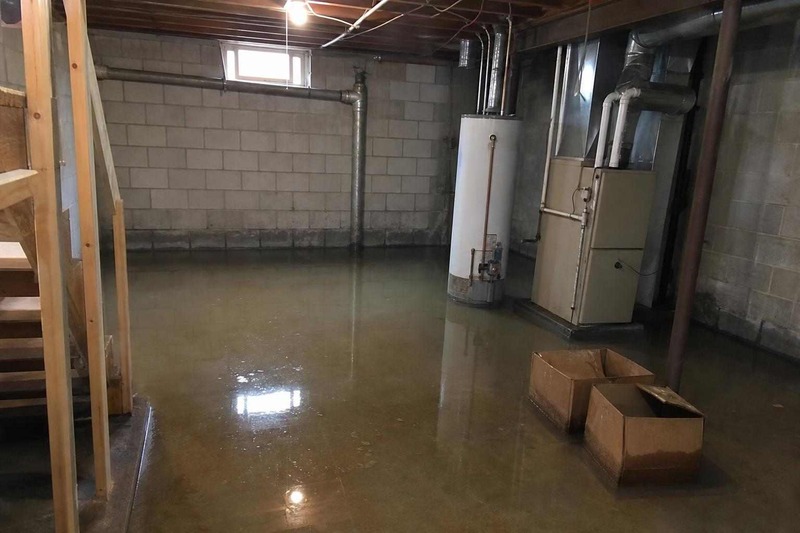
Rain has stopped and the water is still on your basement floor
Deal with power before you deal with water. Never step into standing water when an outlet, a cord or a panel is sitting in it. Shut that circuit off from a dry spot, or stay out of the room and call us.
Once the space is safe to enter, start moving the water out. A wet vacuum handles a thin layer on a concrete floor. A pump is the better tool when the water is deep enough to cover the intake.
Look for the floor drain in the laundry corner. If water is standing over that drain, the drain is not taking anything, and every gallon you push toward it just stays on the floor. Tell us that when you call, because it changes the gear we bring.
Anything light enough to pick up should come off that floor now. A cardboard box gone soft at the bottom will not survive the trip, so take the contents out and leave the box where it sits. Get pictures of the room while it still looks the way the storm left it.
Skip the household vacuum, and skip the drain cleaner. A regular vacuum is not built to lift water, and a chemical will not move a single gallon of it. If the water smells, or if it came up through a drain, stay out of the room and let us arrive equipped for it.
Utah is a dry state, and a dry reputation is exactly what makes a storm like this one catch people out. None of that helps a basement once a storm has already pushed water through a foundation wall.
Grade, gutters and window wells send rain toward the house
Rain water gets into a basement low, and it usually gets in slowly. The common paths are ground that slopes toward the house, a downspout emptying beside the wall, a window well with nowhere to drain, and a gap where the wall meets the floor. Water seeping into basement walls after a storm nearly always traces back to one of those four.
Window wells deserve their own mention, because they collect rainfall like a bucket. A blocked well drain turns a basement window into the easiest entry point on the building, and the damage afterward often resembles a wall failure instead.
Basement seepage in older housing gets a head start. Across Salt Lake City, 25,553 of 97,318 housing units date to 1939 or earlier, and the median build year across the whole city is 1963. Foundations that old have had decades of ground water leaning on them.
Sugar House covers ZIP codes 84105 and 84106, and Wasatch Hollow next door shares 84105 with it. Both sit in the older half of that housing mix. Both send us rain calls that newer streets rarely produce.
Parleys Creek runs through this part of the city and shows up in the federal water data. Nobody can tell from a desk whether a mapped creek has any link to the water inside one house, and we will not pretend to know.
Here is the honest line on the cause. We never seal walls, regrade a yard, or put in outside drainage. A grading contractor does that work, and it is a call worth making once your floor is dry. Our part of it starts after the water is inside.
Hours after the water shows up, do these things first
The first hours decide how much of the room you keep. Federal guidance for wet buildings is to dry damaged material within 24 to 48 hours, and that clock starts the moment water arrives. It does not start when somebody finally spots the puddle.
Four moves matter more than the rest during those first hours:
- Get standing water off the slab before it soaks further into carpet, cabinets and finished walls.
- Photograph the damage before anything moves, because carriers expect pictures taken ahead of any repair.
- Open the room up and move air through it when the air outside is drier than the air inside.
- Lift rugs, boxes and furniture off the wet area so the floor under them can start giving up water.
Hold on to the damaged items until an adjuster has seen them. Paperwork is one of the genuinely useful things we add, because we log what we take out, why it went, and the readings behind the call.
When our crew arrives, the walkthrough comes before the equipment. We check the electrical situation, trace how far the water traveled beyond the visible edge, and mark the wet line on the wall in pencil. That pencil line becomes the map for everything after it.
Then call us. Somebody answers at any hour, and one call puts a crew on the road to you with pumps, air movers and dehumidifiers. Reach us at (801) 903-2904 and tell us how much floor is wet and how long it has been wet.
Deep water, or water still spreading across the floor, is a pump and extractor job rather than a mop-up. The federal EPA guidance on flooding is a plain read on staying safe around flood water while you wait for us.
Carpet, pad and baseboard come out first
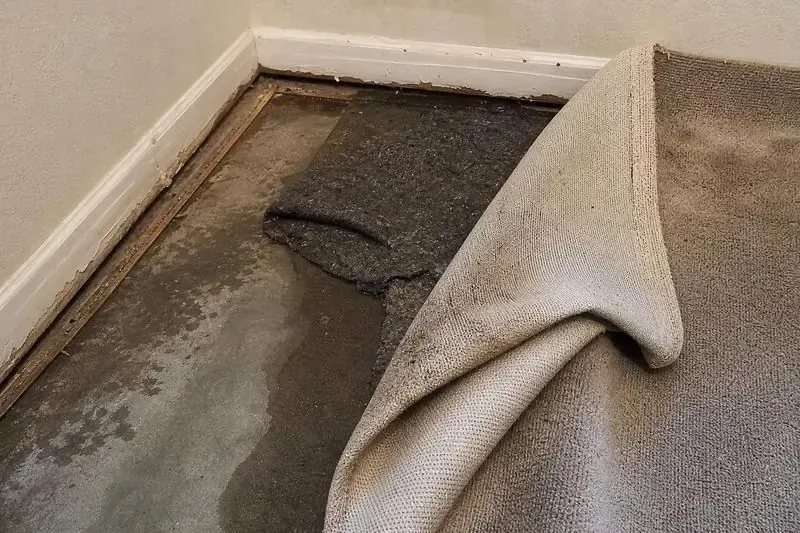
Part of the room dries in place. The rest we carry out. Carpet pad is the clearest example, because pad soaks up water like a sponge and replaces cheaply, so we cut it into strips and remove it.
We can sometimes save the carpet itself, if the water was clean and somebody lifted it quickly. We take baseboard and trim off the wall so the cavity behind them can dry. Where a wall stayed wet, we cut the drywall in a straight line above the water line, which opens that cavity to moving air.
Rain water that has traveled across a yard is not clean water. It carries whatever the ground was holding, and that contamination decides how much material we can save. Clean water from a supply line is a different situation entirely, even when the puddle looks identical.
We remove anything soft that soaked up dirty water, and none of it comes back. That covers wet drywall, carpet pad, particle board and most of what you kept on the basement floor. Federal guidance treats those as replace, not save, once they have taken on flood water.
Then the drying starts, and this is the stage where sloppy jobs fail. A floor that looks dry can still be wet several inches down in the slab and the framing. We set air movers and dehumidifiers, then take moisture readings at the same marked spots every day until the numbers hit the target.
The target is not a guess. We read matching material somewhere the rain never reached, then dry the wet material back to that. When the readings hold, we pull the gear out and hand you the log. Our basement flood cleanup page covers the longer version of that sequence.
Belongings are a separate decision, and an emotional one. Paper, photographs and upholstery hold moisture far longer than the furniture around them. We separate what can realistically dry from what cannot, photograph both groups, and record the reasoning for your insurance file.
Living next to drying gear is unpleasant, and pretending otherwise helps nobody. Air movers are loud, the room stays warm and windy, and the machines have to keep running. Switching them off to get some quiet is the most common reason a room stalls and stops drying.
Again next storm is a drainage job
Whether rain gets in again depends on the outside of the house. Grading, gutters, downspouts and window well drainage settle that, and a grading contractor is the trade that changes it. Drying a room well does not move where the water was heading.
Salt Lake County has a real flooding record behind that question. Federal disaster declarations for flooding here reach back to 1983, 1984 and 2011. Flood maps put parts of Salt Lake City in zones A, AE, AH and AO, and your own street may sit outside all of them and still take water in a hard rain.
The county covers a lot of ground, and the risk is uneven across it. Elevation, soil and the direction a property drains change from one neighborhood to the next. Two similar houses on similar streets can get completely different results from identical rainfall.
A rain event and the spring melt are two different problems. People ask when the snow will melt in Utah and where Utah snow melt goes, and that runoff comes off the Wasatch Front slowly, over weeks. We cover the melting season on its own page. A rain event is short. It pushes water in, it ends, and we extract and dry whatever it left behind.
Keep the drying record even after your basement is finished. A grading contractor arriving later can read exactly where the water tracked and how far it spread, which removes a lot of guesswork from the exterior work.
Salt Lake City publishes its own account of street and storm runoff on the Salt Lake City stormwater page, which is a useful read before you hire anybody for the outside work.
For the water already inside, call us at (801) 903-2904. We handle water damage restoration across Salt Lake City and the valley around it, day or night, and we will tell you straight what your basement needs.
Drainage, Drying Time, and the Cost Question
Coverage depends on how the water got in. Carriers usually pay when water arrives fast and by accident, which is what a burst supply line does. Carriers normally treat rain that runs across the ground and seeps into a basement as flooding, and a standard home policy does not include flooding.
Flood coverage is a separate policy. Your carrier decides your claim, so report the damage early and keep your photos.
Moisture readings answer that, never a calendar. FEMA guidance says a poorly ventilated room drying on its own can need four to six weeks, and pumps, air movers and dehumidifiers cut that down a lot. We set a dry target from material the water never reached, then read the wet material daily until it gets there. A floor can pass a walk across it and still read wet on the meter.
Four things set the size of the job. How much floor the water covered. How many hours it sat before anybody pulled it off.
Whether it got under a finished floor or inside a wall cavity. And how dirty the water was, because dirty water means we carry far more material out of the house. We look at all four in person, because two basements that look alike can be very different jobs.
Serious enough to act on the same day you find it. Seepage comes in slowly, so it usually soaks the bottom of walls, the carpet pad and whatever sat on the floor before anybody notices. The federal window for drying soaked material closes somewhere between 24 and 48 hours. Wait past that window and mold gets a foothold in the material, which means more of your basement leaves instead of drying.
Some of it really is a do-it-yourself job. Clear the gutters, extend the downspouts away from the wall, clear the window well drains, and build the soil back up so the ground slopes away from the house. That work is honest and worth doing.
What you cannot do yourself is dry a wall cavity or a slab you cannot see inside, and leaving a wet cavity closed up is how a small job becomes a large one. Larger grading and drainage repairs belong to a grading contractor. The water already inside is ours.
Wet Padding Turns Into Removed Padding
Give us a call on (801) 903-2904 and say how far the water spread. We answer day or night and we bring pumps.