
What to Do When a Pipe Bursts in Salt Lake City
The first ten minutes decide how much of your floor survives. Call and tell us what is spraying.
Do not go hunting for the split pipe first. Shut the water off, keep power away from the wet floor, then call us. We do water damage restoration in Salt Lake City, and that is the order we work in whenever a supply line fails.
Most people spend their first ten minutes on the wrong problem. They chase the sound of the water while the broken line keeps feeding the floor underneath them. Every minute that line stays open pushes more water into places you cannot reach.
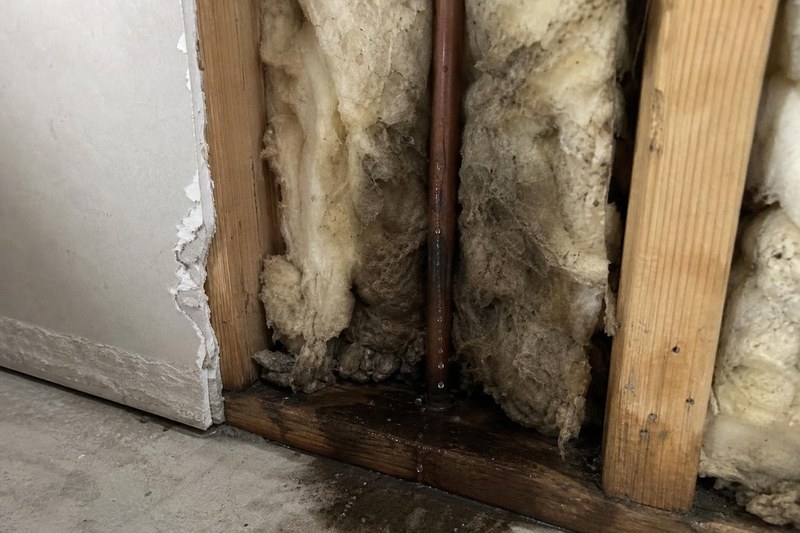
Shut the water off before you look for the leak
Find the main shutoff valve and close it. That single move stops the flow, and nothing else you do matters until it is closed. Then keep everyone off the wet floor until you switch the power to that room off.
Water and live circuits share a wall. If a chest freezer in the corner is standing in it, leave the freezer alone and cut the breaker instead. Do not reach behind the appliance and do not unplug anything while your feet are wet.
Once the valve is shut, call us and describe what failed and where the water is sitting. We always ask how long it has been running. That answer changes the equipment we load and the schedule we build around you.
Almost nobody knows the answer, and that is fine. Water that has been loose and unnoticed has already traveled under the flooring and into the wall. The puddle you are looking at is the smallest part of the problem.
Ten minutes of work that pays off while you wait
Use the wait to move whatever water ruins, and to record the damage before the cleanup begins. Lift fabric, paper and anything sitting on a cardboard base up off the floor. Photograph every wet room from two directions before you shift anything.
Those photographs matter later. Insurance decisions rest on what the property looked like before anybody touched it. Your phone is the only camera in the building at that moment. Take more pictures than feel necessary, including the ceiling below the leak.
Prop the interior doors open so air can circulate between the rooms. Pull up loose rugs and carry them somewhere dry. Leave heavy furniture where it sits, because a soaked sofa is a two-person lift and the flooring is dangerously slippery.
Skip the mop and the towels once the water covers more than a small patch. Blotting removes the top layer and leaves everything else inside the carpet pad and the subfloor. That deeper water is exactly what our extraction equipment pulls back out.
Before anything dries, the water has to come off the floor
Standing water comes up first, before any drying equipment runs anywhere in the building. We pull it off hard flooring and out of carpet in slow overlapping passes. The saturated pad underneath usually comes out in cut strips, bagged at the door.
Burst pipe cleanup is that removal work. Drying begins only once the floor is clear, because no machine can evaporate a puddle faster than a hose can lift it. That first visit is all about getting the standing water gone, and it decides how much of the room survives.
Water rarely stays where you can see it. It travels under a cabinet kick board, along the subfloor, and up the drywall inside a wall cavity. So we open whatever has to open, and the wall stays open until the material underneath is dry.
Water leaving a supply line starts clean and does not stay that way. Once it has soaked through carpet pad and dirty flooring for hours, the water itself has changed. Contamination then decides what can be saved and what has to leave the property. That category judgment reorganizes the entire job, and most homeowners have no idea it exists.
The drying equipment is the last stage, not the first. Air movers keep evaporation running off the wet surfaces. Dehumidifiers then capture that moisture out of the air, before it resettles in a dry room next door. Both are useless while a puddle is still sitting there.
Our scope stops at the water. We remove it, remove the material that will not dry, and return the structure to a dry condition. The pipe repair itself belongs to a separate trade, and you book that repair on its own.
Call (801) 903-2904 once the valve is shut. Tell us which room the water is in and whether the electricity there is off.
Cold nights in the valley are what split the line
A frozen pipe does not usually burst while it is still frozen. Ice grows inside the line and shoves a plug of water against a closed tap or a tight elbow. Pressure builds behind that plug until the weakest joint finally gives.
Then the thaw arrives and the split reveals itself. Water begins moving again through a crack that opened during the cold snap. It lands wherever the pipe runs, which is often a ceiling one floor below the failure.
That freeze-thaw swing is the biggest single reason we get these emergency calls. The valley cools hard at night and warms again by the middle of the day. A supply line inside an exterior wall rides that temperature swing every single time.
The Wasatch Front takes several hard freezes in an ordinary year. The National Weather Service publishes the winter weather safety guidance that covers them. It is worth reading before the first deep freeze, rather than after one.
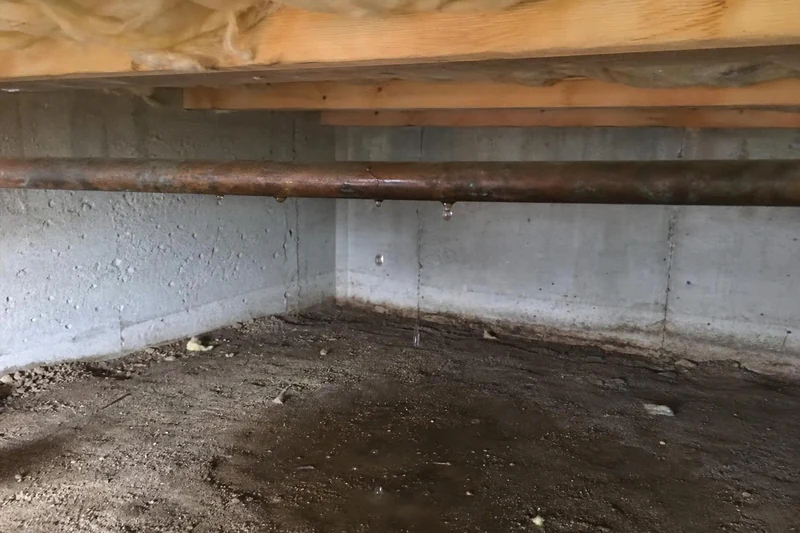
Utah's older houses hide the pipe most likely to go
Age is the best warning signal available. Salt Lake City counts 97,318 housing units, and 25,553 of them went up in 1939 or earlier. The Avenues and Capitol Hill are full of that older stock.
A property that old often still runs its original plumbing in places. Galvanized steel supply pipe, the dull gray kind, was standard equipment for decades. It corrodes from the inside until the wall of the pipe is thin. A cold snap finds that thin section first.
Salt Lake County holds plenty of newer housing, and those properties are not immune either. A plastic supply line inside an unheated space freezes just as quickly as an older metal one. Age only changes the odds.
Utah State University Extension publishes a plain guide to why pipes freeze and how to shut off the main line. It is worth ten minutes of your attention on a calm day.
A burst line is one of the few emergencies where the first ten minutes really belong to you. Shut the valve, clear the electricity, then let us remove the water.
For water damage restoration in Salt Lake City, call (801) 903-2904 at any hour. You can also read the rest of what our water damage work covers.
Valves, Insurance, and the First Night
Yes, and it is the first thing to do. Close the main shutoff valve so the broken line stops feeding the floor. If the valve will not turn, close the smaller valve at the fixture nearest the leak instead.
Most home policies cover it when the failure was sudden and accidental. Those two words carry the whole decision. A slow drip that ran unnoticed for months usually lands on the maintenance side instead.
We never promise a coverage decision, because that decision is not ours to make. What we hand over is documentation: photographs before anything moves, an itemized list of what came out, and the daily record.
A burst line usually produces two separate bills, and only one of them is ours. Ours covers lifting the water out, removing material that will not dry, and operating the drying equipment until the structure is fully dry.
The second bill covers the pipe repair itself, and that trade sets its own charge. The two arrive separately because they are different jobs performed by different people.
Treat it as urgent from the first minute. Urgency here runs from the moment the water arrived, and the first ten minutes are the part you control. Shutting the valve inside that window is worth more than anything else you can do.
Material keeps drinking for as long as the water sits. An hour in, it has reached the carpet pad and the subfloor, and the removal gets bigger. We answer at any hour, and the sooner we know what failed, the smaller that removal stays.
Cold weather explains most of them. Water freezes inside the line, pressure builds against a closed fixture, and the weak point lets go. The freeze-thaw swing across this valley makes that a seasonal pattern here.
Age explains the rest. Galvanized steel supply pipe corrodes from the inside for decades until the wall is paper thin, and a house still on its original plumbing carries the thinnest sections of all.
Water Is Still Moving Through the Building
Call (801) 903-2904 and tell us which line let go. We answer any hour and we arrive with extraction gear.