
How to Get Smoke Smell Out of House After a Utah Wildfire
The smell fades before the residue does. If your rooms still carry it, we answer day or night.
Weeks after the smoke cleared, that smell came back. You opened the windows, wiped down what you could reach, and for a day or so it seemed to work. Then the rooms warmed up and the smoke odor was right there again.
Chasing the smell from room to room is the wrong approach. The smell is not the damage. The damage is a thin film of smoke residue, and it settles on your paint, your window glass, your metal fixtures and every piece of fabric in the house.
That film is what keeps handing the odor back. Air the house out and the rooms clear temporarily, because the loose smoke leaves with the moving air. Warm the rooms up again, or run the fan, and the odor returns, because nobody has lifted the residue off the surfaces.
So the honest remedy is surface work rather than a scented spray. Below is what the residue is made of, how it travels through a house, and what it takes to get it out of a Salt Lake City home.
Residue is the film smoke leaves behind on every surface
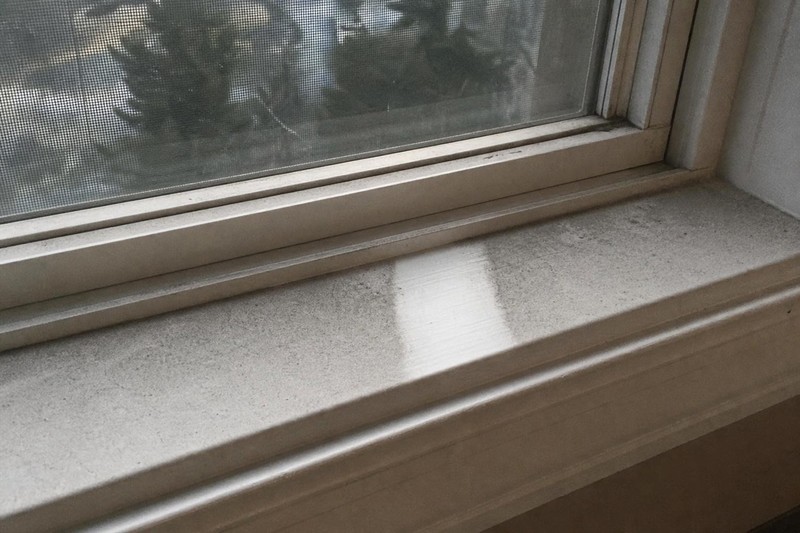
Wildfire smoke carries fine particles and an oily haze that settle out as a film. That film lands on walls, window glass, painted trim, light fixtures, and the inside of your cabinets and closets. You will not always see it, but you will smell it whenever a room warms up or the air starts moving.
The odor fades first, because it is the lightest end of the smoke leaving the room. The heavy end stays behind on the surface. It keeps releasing that odor long after the air seems clear again.
The film is not kind to your finishes, either. It dulls flat paint, hazes window glass and discolors white trim. It marks the finish on faucets and hinges, settles into grout and caulk lines, and continues working at those materials.
Run a finger along a west-facing window track after a smoke week and you will pick up the grit that settled there while the windows were closed. That track is a reliable gauge for the rest of the house. Whatever collected in it also collected on your ceilings, your cabinet tops and the shelves nobody ever examines.
You can find the film without any special equipment. Wipe a clean white cloth across the top edge of a door frame and examine what comes off. Do the same on a cold light bulb, and on the upper corner of a window frame.
The EPA guidance on wildfires and indoor air quality covers this same ash and soot problem. It applies to properties that never caught fire themselves. That distinction matters, because a smoke week and a structure fire leave completely different damage behind.
Filters and ducts carry smoke into rooms you never opened
Smoke does not remain where it entered. Your heating and cooling system pulls air out of every room, pushes it through a single filter, and sends it back out again. Once smoke reaches that circuit, it reaches the entire house.
A furnace filter pulled after a smoke week comes out gray and smells like the outdoor air did. That is the filter doing exactly its job. It is also a useful indicator of where the remainder of the smoke ended up.
Examine your register faces and the return grille. A gray outline around the slots means the system carried smoke through the house while the interior doors were closed. That is why closets, dresser drawers and top shelves smell of it, even in rooms nobody opened.
Change the filter before you clean anything else. A loaded filter puts the same smoke straight back into the room you have just finished wiping down. If smoke is still arriving from outside, leave the fan off and keep the windows closed.
Duct cleaning and heating work belong to a different trade, and we do not take that part of it. We clean surfaces and contents. Tell the technician who services your system that the house sat through a smoke week, and have them examine the ductwork while they are there.
Soft materials hold smoke odor the longest
Fabric is the difficult half of soot cleanup. Hard surfaces wipe down, but soft materials soak the smoke up and hold it far longer than a painted wall does. That is why a room can look perfectly clean and still smell of a distant fire.
- Carpet and the padding underneath hold smoke deeper than any vacuum reaches.
- Curtains, roman shades and fabric blinds sit exactly where the outdoor air came in.
- Couches and armchairs take the odor down into the foam, not only the cover.
- Bedding, towels and hanging clothes pick it up straight through a closet door.
- Mattresses and area rugs hold it long after everything around them has stopped smelling.
Some of that washes out at home with ordinary laundry, and some of it needs cleaning we do on site. Some of it leaves in a pack-out, meaning we carry the pieces away, clean them properly, and return them. Smoke odor removal is mostly this work, done material by material.
A couple of household remedies absorb a little smoke while you wait. Activated charcoal and open boxes of baking soda pull some of it out of a closed room. Neither one reaches what has already bonded to a surface, so treat them as a temporary measure.
People always ask how long the smell takes to disappear. The honest answer is that the calendar matters far less than the inventory. It depends on how many materials the smoke reached, how absorbent each one was, and how long the residue sat there before anybody started cleaning.
The odor gets into your fabric as well as your walls. Call (801) 903-2904 before you start throwing furniture out. Plenty of what looks ruined comes back.
August is when Utah smoke weeks reach Salt Lake City homes
Utah takes its wildfire smoke in late summer and early fall, and August is squarely inside that window. No fire has to be anywhere near you. Smoke drifts in from well outside the state and then settles over the valley for days together.
Mountains stand on both sides of Salt Lake City. Air that sinks into that bowl does not always move on quickly. Salt Lake County holds most of the valley floor, so a smoke week generally covers the entire county at once.
Salt Lake City properties that never came close to a fire still end up needing soot cleanup. The Wasatch Front collects several of these weeks in a bad season. That repetition is what creates the real residue problem here.
A property that took smoke in the first round is still carrying that film when the second round arrives. The newer layer settles straight on top of the older one. An untreated room smells stronger from one season to the next.
The Fire and Smoke map on AirNow.gov, the federal air quality index, covers Utah through a smoke week. It will tell you when to shut the house up. It cannot tell you anything about what has already settled inside.
Ozone and sprays cover the smell without lifting the residue
Ozone comes up constantly online, and so do scented gels, candles and fogging sprays. Every one of them changes what a room smells like for a while. The film on your walls and your fabric is untouched underneath, so the odor returns as the scent evaporates.
The work that lasts is considerably duller than that. We wash the hard surfaces with the right cleaner for each material, clean or carry out the soft materials, and replace the filters. Our crew runs HEPA air scrubbers while they work through the rooms.
Then we revisit the surfaces nobody cleaned, which is generally where the last of the odor is hiding. Airing the house out genuinely helps at the edges, and it carries off whatever is still floating around the rooms. It does nothing for what has already bonded to a surface, and that is the part you are still smelling a month later.
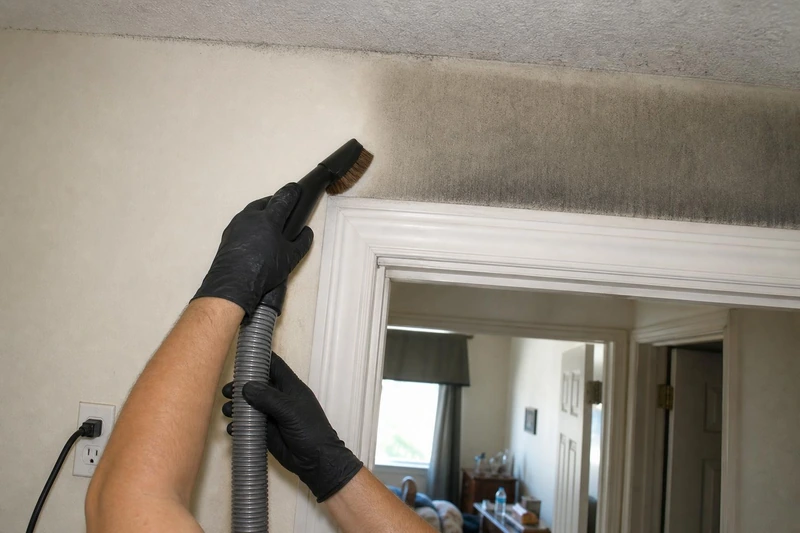
Order matters more than product choice. Clean from the top of a room downward, because everything you disturb on a ceiling lands on what you already wiped. Change your cloths often, and rinse them instead of smearing the film into a wider circle.
One thing we will not do is tell you what smoke does to a person. If somebody in your household has a health question, that question belongs with a medical professional. Our end of this is the material: what the residue landed on, and how it comes back off.
We cover Salt Lake City for soot cleanup and smoke odor removal, and we begin by identifying what the film actually reached. The same crews handle water and mold damage restoration across the valley, and heavier fire damage goes through our smoke and soot damage service.
Call (801) 903-2904 and identify the rooms that still hold the odor. We answer at any hour, and we start on the surfaces those rooms give up.
Smoke Odor Questions a Utah Smoke Week Leaves Behind
Count the materials, not the days. A room of tile and painted walls clears long before one packed with carpet, drapes and upholstery. Speed matters too, since residue left alone keeps working into whatever it landed on.
Charcoal and baking soda take a small amount of odor out of a closed room. Your fabrics absorb far more than either one, which is why the couch and the curtains keep handing the smell back. Neither absorber reaches residue that has already bonded to a hard surface.
Opening the windows clears the loose smoke and the rooms improve for a day. The odor comes back once they warm up, because the residue on your walls and fabric stayed put. Fresh air moves what is floating and leaves what has settled.
We work surface by surface instead of spraying the air. Our crew matches a cleaner to each material, cleans or carries out the soft items, and changes the filters. Then we go back over the spots nobody thought to wipe, because that is where the last of the odor hides.
Anything that soaked into something soft gives the most trouble. Smoke in carpet padding, mattresses and upholstery sits deeper than a vacuum or a wipe can reach. Those pieces need cleaning built for the material, and some of them leave the house to get it.
An air scrubber pulls the floating smoke through a filter and holds it there. What it cannot do is lift the film already stuck to your ceiling, cabinets and trim. So the machine and the cleaning run together, since neither one finishes alone.
Residue Settles Deeper the Longer It Sits
Tell us on (801) 903-2904 which rooms still smell. We answer day or night.