
Water Damage Restoration Farmington UT
Has the hardwood started to cup at the seams yet? Wet boards absorb across the grain, and the window for keeping them runs in hours, not days. Phone us before that window closes.
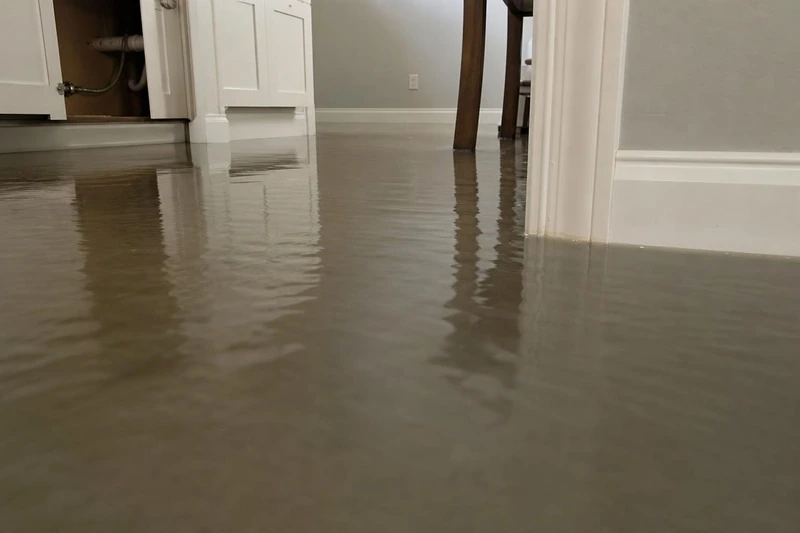
Reaching the Water Under Farmington Hardwood, Then Pulling It Out
Solid hardwood is nailed or glued straight to the subfloor, so nobody lifts a board to look underneath. That single detail governs every wet floor we work on in Farmington. The water you can see on the surface is the easy half of it.
The rest has already run down the seams and spread across the subfloor below. A finished board face will not hand that water back up through the top, however long a machine sits on it.
So the first thing we settle is our route to the water, not our equipment list. Surface extraction comes first, and it is honest about its limitations. We take the standing layer off with an extraction wand, then switch to a water claw that presses hard enough to draw moisture up through the seams.
Where water has pooled deep in a stairwell or a mechanical room, a submersible pump moves the bulk of it before any hand tool touches the boards. Getting the volume down first is what makes the careful work on the hardwood possible at all.
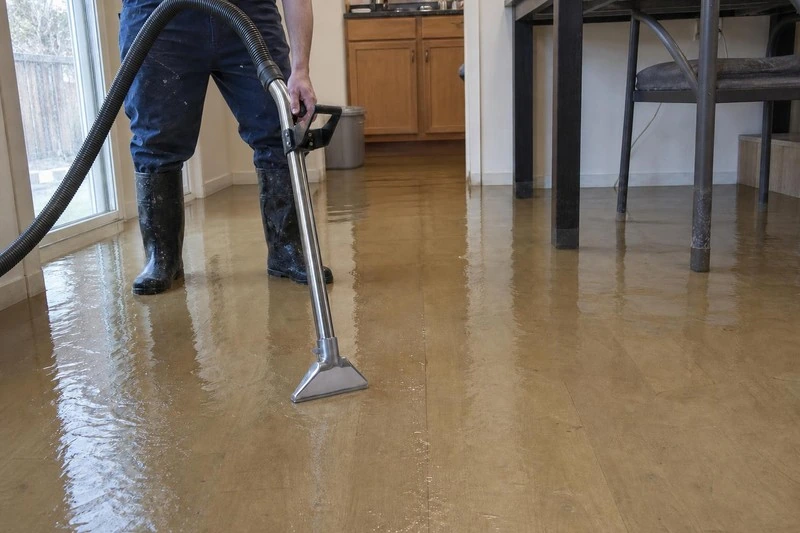
Then comes the decision the whole job turns on. We probe the subfloor through the seams with a moisture meter and measure how far the wet field actually runs. Either those boards dry through their own faces, or a run of them comes out so we can reach what is sitting underneath.
We make that call before a single drying panel goes down. A panel laid over the wrong square footage holds the problem in place and costs you the floor it was supposed to save.
What we settle before the drying system goes down
- Grain direction. Water travels along the length of a board much faster than across it, so the run of the grain tells us where the wet field ends.
- How the floor is fastened. Nailed floors and glued floors release water at different speeds, and a glued floor is far likelier to cost boards.
- Reach from below. An unfinished basement ceiling or an open joist bay is a free route to the underside, and it changes the entire operation.
- What is standing on top. Furniture, rugs and base trim leave the floor before the equipment arrives, never afterwards.
- Where the water stops. We mark the edge of the wet field with the meter so the drying system covers that footprint and no more.
One Wet Farmington Floor, and the Routes the Water Took to Reach It
The count in Farmington runs to 7,397 housing units, 5,686 of them detached and standing apart. The stock leans young: 1,951 were built between 2000 and 2009, and another 1,817 between 2010 and 2019. Only 17.3 percent of it predates 1980.
That mixture changes which failures we encounter most, but it does not shorten the list. Standing water is standing water, and it arrives here by a long list of routes.
Water that arrives under pressure from inside the house
In houses this age the supply side generates most of our calls. A frozen pipe in an exterior wall splits under its own pressure and lays clean water over a floor in minutes. So does a water heater failure in a finished basement.
A dishwasher feed or a washer hose parts behind a cabinet and ends the same way. A toilet or fixture overflow upstairs announces itself through the ceiling below.
The drainage side fails differently and it fails dirtier. Flow reverses in a sewer line and comes back out at the lowest fixture in the house. When a sump pump quits, the pit it was emptying fills and goes over the edge.
A sprinkler or irrigation backflow belongs in that same category. It can drive yard water straight into a window well on a wide lot.
Water that arrives from outside, above or below
Snowmelt and storm runoff still find the low door and the buried window on plenty of these properties. Farmington City's storm water and floodplain management page is worth a read if your street is one of the ones that ponds after a heavy melt.
An ice dam works from the roofline instead, backing melt up under the shingles until it comes through a bedroom ceiling. A roof leak does it with no ice involved at all, and basement seepage or groundwater pushes in at the wall base after a soaking spring.
The older end of town holds 236 homes built before 1940 and 845 more from the 1970s. On those roofs a swamp cooler leak sends water down the same path. An evaporative cooler is that rooftop unit, and it sits directly above the rooms it soaks.
Taking that water back out is our end of the job. Repairing whatever opened the door is not.
Boards Dry Through the Face, and the Joist Bays Dry Last
Once the standing water is gone, the drying system goes down along the route we already chose. Floor drying panels seal to the hardwood and pull air through the board faces, which is the only avenue into a floor that cannot be lifted. Air movers and a dehumidifier keep the room air moving so the moisture escaping those boards has somewhere to go.
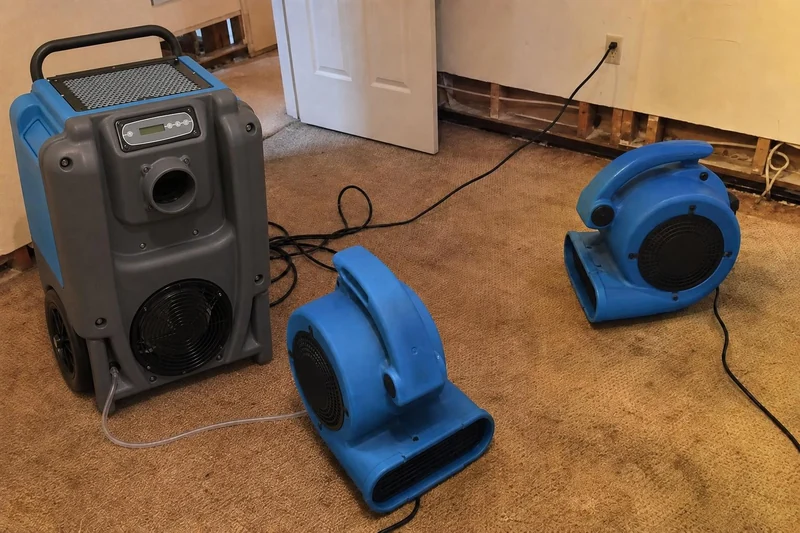
Where the drying gear actually goes
The joist bays under the floor hold the last of the water. They surrender it slowest of anything in the room.
If a wall cavity took water too, the base trim comes off first. Then a line of weep holes goes in low on the drywall, which lets dry air reach the cavity. That cavity work is unglamorous, and skipping it is how a floor ends up dried twice.
Hardwood We Try to Keep, and the Layers That Rarely Survive
Hardwood is the reason to move quickly and it is also the layer most worth saving. Boards reached early and dried from both directions usually flatten back out. Boards that sat, cupped at the seams and then crowned are a replacement job instead.
- Solid hardwood. Saved more often than people expect, provided the surface water came off early and air reached the underside.
- Carpet padding in the next room. The carpet face cleans up and recovers, while the padding beneath it goes into the truck almost every time.
- Base trim and the lower drywall. Both wick upward and hold water long after the room feels normal, so we take them off rather than gamble on them.
Contents get their own decision, and we make that judgment out loud with you. A wool rug that has been in the family comes up, goes on blocks and dries on its own schedule. It never goes through whatever plan the floor beneath it needs.
Oakridge Village and the Rest of Farmington's Single ZIP Code
Every address here falls under one ZIP code, 84025, in Davis County, inside the Ogden metro area. Oakridge Village sits in that same ZIP at 4,345 feet, a shade above the 4,246 feet recorded at the city center. Farmington's nearest boundary sits about 15.8 miles from where we are based, which is an ordinary morning.
The flood picture here is not tidy. Zones A, AE, AH, VE and X all appear inside the city limits, and the AE areas take in mapped floodway. The federal claim record for this ZIP holds 14 paid flood claims, with dates of loss running from 1983 through 2024.
Winter storms and spring runoff account for a good share of that exposure. The federal severe weather preparedness guidance on Ready.gov covers the household side of that better than we can here.
Fruit Heights and Kaysville sit just north of here, Centerville just south, and all three fall inside our normal run. Our coverage map across Davis and Salt Lake counties is the place to check if your address is further out.
We run the same water damage restoration out of Salt Lake City on every call. That covers a midnight extraction call and a basement that has held water for a while.
Tell us which room it is and what those boards feel like underfoot. We will bring the floor panels on the first trip.
Pipes, Ice Dams and Old Flood Years in Davis County
Flexible plastic line, the kind sold as PEX, takes a freeze better than rigid copper. It swells a little before it splits, which buys room that copper never has. That is a head start and not a promise, since fittings still let go in a long deep freeze.
Read your own policy before you assume either way. Most wording turns on whether the melt arrived suddenly or dripped in all season. Farmington roofs see both. We hand you dated photos and a daily moisture log, and your adjuster takes it from there.
Pick a decade and Utah has one. Federal flood claims filed in this ZIP carry dates of loss from 1983 all the way to 2024. The year that costs you money is the one your own floor gets wet, and that one rarely shows on a map.
One Number Reaches the Whole Crew
The line rings through to a person at 3 a.m. exactly as it does at noon. Call Water Damage Restoration Salt Lake City and you hear an honest arrival time, not a script.
Start Where the Boards Are Wettest
How long have those boards been wet, and what is sitting on top of them? We load floor drying gear before we roll toward Oakridge Village.