
Water Damage Restoration Centerville UT
Which edge of that room sits against the outside wall? Cold water there turns to ice, and an extraction head passes straight over ice and lifts nothing. Get us on the phone and we put heat on that edge first.
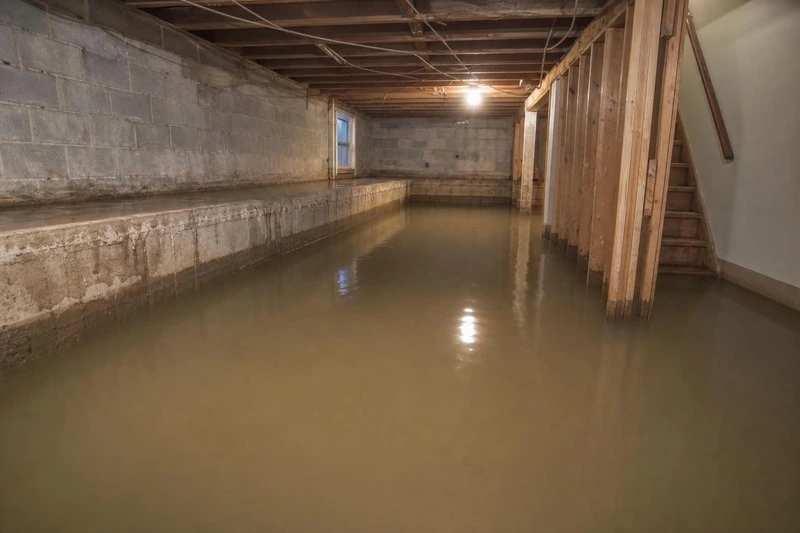
Thawing a Centerville Basement Edge Before Extracting the Water
Keep your feet off the strip of floor where the water meets the outside wall. That edge hardens first in a cold house, and a boot through it spreads slush everywhere.
A truck-mount extractor is a pump that lives on the truck and runs a hose into the house. Fed liquid water it clears a flooded room quickly, and fed ice it lifts nothing at all.
So the ceiling on a cold job here is not the size of the pump. It is the share of the water still liquid when the head goes down. Call us and tell us what the thermostat says.
What happens first
- We walk the perimeter and mark every stretch of floor that has gone hard.
- We put heat on that cold edge so the frozen skin starts to let go.
- We pull the open water off the middle of the floor while the edge softens.
- We work the wand back toward the wall and take whatever the thaw releases.
Where the machine runs out of room
Suction moves liquid water, and ice remains a solid until we change its temperature. On a wet slab we squeegee the open water toward one low corner and hold the wand there. A squeegee skates over a frozen edge, so that strip waits its turn.
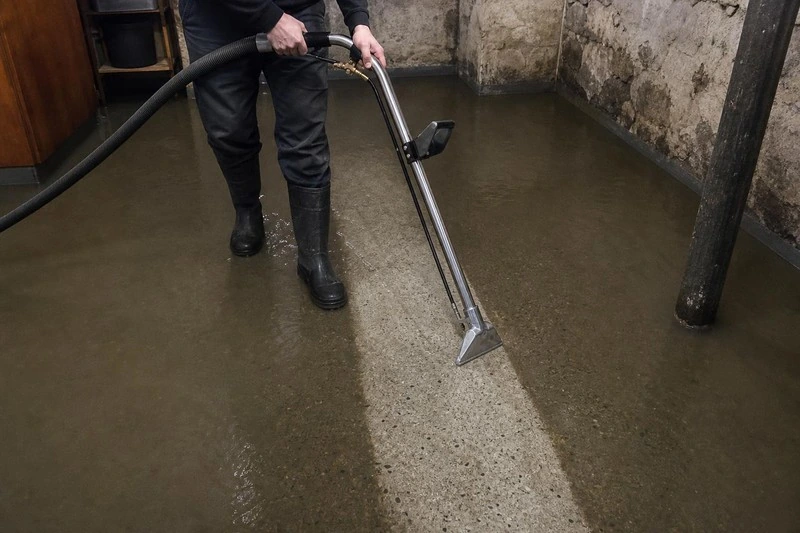
Why the frozen edge waits its turn
Heat goes in at the perimeter first, along the base of the outside wall where the cold comes through. Extraction follows the thaw line inward, one strip at a time, and never gets ahead of it.
An edge left frozen reads dry to the touch and to a meter. It melts later and re-wets a floor we already cleared, so the room comes back wet a day into the job.
How cold the room has run matters more than how deep the water looks. The National Weather Service keeps a plain guide to cold weather safety, and a house that dropped that far behaves differently.
Cold Weather and the Other Ways Water Gets Into a Centerville Home
Out of Centerville's 5,914 housing units, 4,349 stand alone on their own lot. Some 37.7% of them went up before 1980, and the busiest stretch of building here was the 1970s.
Age shows up first in the parts that hold water under pressure all day. A burst or frozen pipe and a water heater that splits both dump clean water fast. A washer hose, a dishwasher feed or an overflowing toilet lands water on the floor in any month of the year.
Plenty of older roofs here still carry a swamp cooler, the evaporative cooler that pipes water up onto the roof. When its pan leaks, water lands in the ceiling and comes down through a light fixture.
Below the main floor the list changes shape. Thaw week is when a sump pump gives out and a drain backs up into the lowest room. Basement seepage or groundwater arrives more slowly and soaks the same materials.
Snowmelt and storm runoff belong there too, since the ground sheds water toward the street. The public works department at Centerville City runs the storm drain system, and a blocked inlet sends that water somewhere it was never meant to go.
The ones that come from above and outside
An ice dam builds at the eave and pushes meltwater back under the shingles instead of off the roof. Ice is not a requirement, though, and a roof leak runs in mild weather once the shingles give out. A sprinkler or irrigation backflow works on the house from the yard side instead.
We do not repair any of the parts that failed. Our end of it starts at the water on the floor and the ice along the wall.
Warming a Cold Centerville Wall Until It Gives the Water Back
Water leaves a warm wall faster than a cold one, and the outside wall is the coldest in the room. Drying it means bringing that wall up in temperature before the air can take anything out.
- Air movers go along the base of the outside wall, aimed down its length so the air sweeps the surface.
- Dehumidifiers sit central and collect the water those air movers lift off the surfaces.
- Heat holds the room steady so the perimeter never drops back below freezing at night.
The setup runs day and night, and we move it inward as the wet area shrinks. Structural drying finishes on the material's own schedule, and a cold perimeter always takes longest.
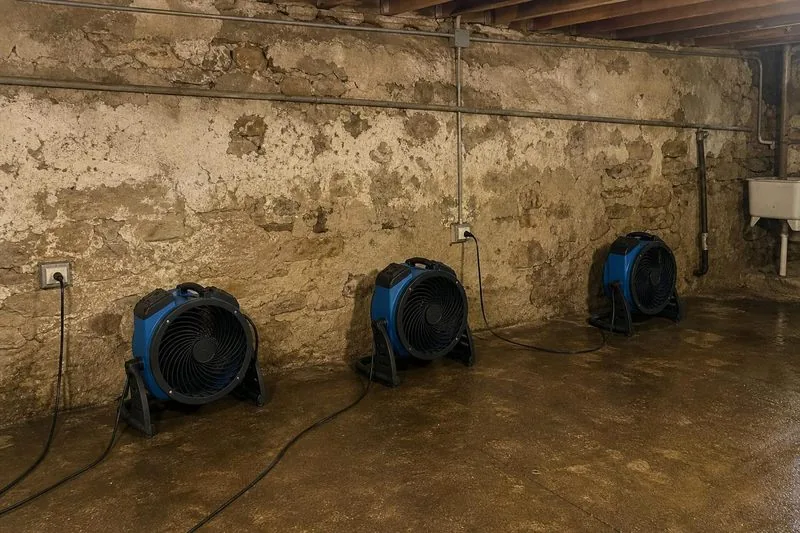
Behind the baseboard on the cold side
Water wicks up off the floor into the wall cavity, and the baseboard hides how far it climbed. Air moving past a closed space does very little, so we open the bottom and dry it directly. On a Centerville outside wall that is also where the last of the ice hides.
Some of a Centerville Basement Dries in Place, and Some of It Leaves in the Truck
Material decides this, and every surface holds water differently. Anything that traps moisture where moving air cannot reach it becomes a candidate for removal.
- Pad under wet carpet comes out first, because it holds more water than the carpet above it.
- We lift and float the carpet where the backing is sound, and cut it where it is not.
- Behind the baseboard the wall stays wet, so we take that trim off once the carpet is clear.
- Wet insulation leaves with whatever we open, since it holds water against the framing.
- Drywall takes a flood cut, and we set that line above where the water stopped.
- Tile, sealed concrete and cabinet bases usually stay put and dry where they are.
What we get out of the room first
Some things never get a second attempt. A wooden crib against the outside wall, a box of sheet music, the family Bible with the names in the front: those move out before a machine moves in.
We pull the standing water the same way whether it is warm or half frozen. A finished basement adds a second layer of work on top of that.
ZIP 84014 Belongs to Centerville Alone
ZIP 84014 covers Centerville and no other city, which is unusual on this side of Davis County. When a caller gives us that ZIP we already know the housing and the drainage waiting for us.
The city sits at 4,246 feet, inside the Ogden metro area. Its mapped flood zones run A, AE, AH, AO and X. A floodway sits inside the AE, and a 0.2 percent annual chance band inside the X.
Flood insurance records on 84014 show ten claims, with dates of loss running from 1980 through 2023. Ten claims across that span is a thin record, and most of what we pump out never touched a flood map.
The ZIP and the city name do the work here. The map of where we work shows the rest of the route.
West Bountiful, Bountiful and Woods Cross all sit south of here, and a cold floor down there behaves no differently. The home page lays out how we handle water damage restoration.
Before You Call It Minor, Read These Three Answers
Minor usually means the water stayed on hard surfaces and got wiped up on top. Once it runs under a baseboard, under carpet pad, or along a cold outside wall, it is not minor. On a Centerville job the frozen edge is what people call minor.
A ceiling holds water above your head in a space nobody can see, which is why it is the serious one. Drywall up there carries its own weight plus the water, and it usually releases all at once.
Yes, because wet material and time are the whole recipe. A single leak that soaks into something absorbent will manage it on its own. Our answer is speed: pull the water, warm the surfaces, and dry the material before anything starts.
One Number Reaches the Whole Crew
The line rings through to a person at 3 a.m. exactly as it does at noon. Call Water Damage Restoration Salt Lake City and you hear an honest arrival time, not a script.
The Frozen Edge Is Not a Dry Edge
Stop reading that icy edge as finished and tell us how cold the room has run. Frozen water reads dry to a meter right up until it melts.