
Water Damage Restoration Midvale, UT
Nothing dries on one side of a shared wall while the other side is still holding water. Call us and we read both faces before any gear goes down.
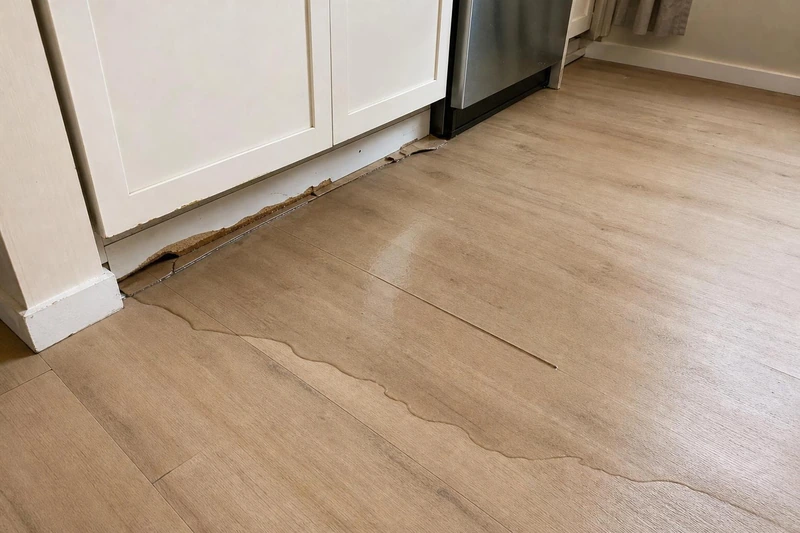
Extraction That Runs Both Midvale Rooms in Order
We will not open by asking what broke. Standing water behaves the same whether a tank let go or a drain backed up, and it soaks into something new while anyone answers that question.
Order is most of this job. The right steps in the wrong sequence cost you the same room twice, and that is the most expensive mistake on a water loss.
Almost every call here is two spaces, not one. The room you can see is wet, and the space the water came through is still loaded, feeding it through the wall or floor they share.
So we work both spaces with one truck-mount extractor on the same visit. It runs off the vehicle at the curb, so the vacuum keeps pulling as long as the floor gives water up.
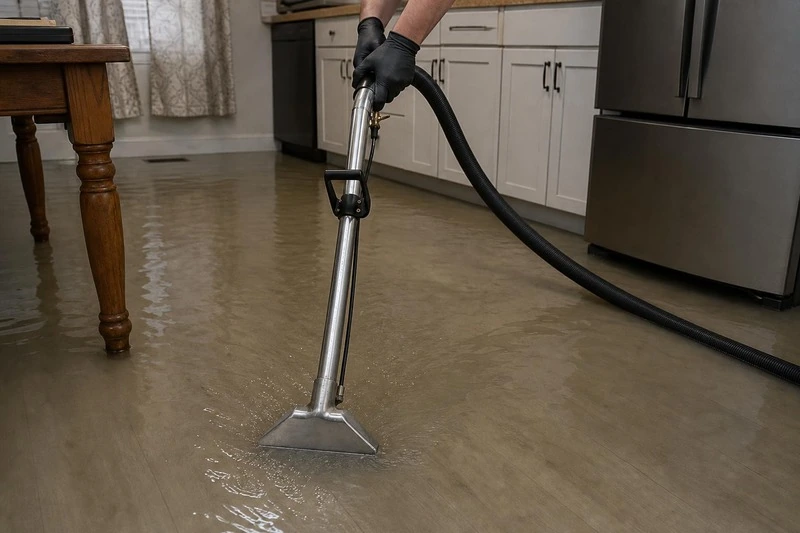
Before any of that, a moisture meter goes along the base of the shared wall from each side. What it finds on the far side sets the order of everything after.
Why the next room sets the order
Only 5,719 of Midvale's 16,383 housing units are single-family detached homes. Most people here share a wall, a floor or a ceiling, so the second space often belongs to a neighbor.
That turns a plain extraction into a scheduling problem. Somebody has to open the door next door before the first room closes out, so we raise it on the first call.
The order we work in
- Read both sides of the shared assembly first, because the wet side you cannot see decides the plan.
- Pull the standing water from both spaces, starting with whichever one still feeds the other.
- Open the wall base before the equipment goes down, since air aimed at a closed assembly does very little.
- Dry the two spaces on the same clock, so neither re-wets from the framing they share.
- Sign the pair off together, never the finished room on its own.
Skip a step and the room comes apart twice. The trim comes off again, the equipment goes back down, and you pay twice for one job.
The Ways Water Gets Loose in a Midvale Home
What breaks here is worth knowing, because the housing stock tilts the odds.
Roughly two in five Midvale homes went up before 1980. The largest single block, 3,280 units, was finished between 2010 and 2019, so two different failure lists sit inside one city.
Most of what we pull starts inside the plumbing. Older homes lose a burst or frozen pipe, a water heater that opens at the seam, or an appliance supply line behind the washing machine or dishwasher. Newer ones lean toward the fixtures, where a toilet or sink overflow runs for hours with nobody home.
Below the floor the list changes. A sewer or drain backup pushes up through the lowest fixture, a sump pump failure lets the pit fill and spill, and basement seepage or groundwater arrives through the slab after a wet stretch.
Water from outside is the seasonal half. Snowmelt and storm runoff find a low door or a window well, an ice dam backs melt up under the shingles, and a roof leak drops it into the ceiling below.
Midvale sits in Salt Lake County, and the county's flood control engineering office maintains the drainage channels that carry that runoff off the streets.
Two more turn up on a warm week. A sprinkler or irrigation backflow pushes water back toward the house when a valve fails. A swamp cooler, the evaporative cooler on the roof or wall, drips through the ceiling once its float gives out.
Evaporative coolers sit on the older half of the city far more than the new. Whichever one it was, the water ends up under the floor covering, up the wall base, and inside the framing.
Drying Two Spaces on the Same Schedule
Drying only starts once the standing water is gone and both sides of the assembly are open. Air movers go along the wall base, and a dehumidifier runs where the two spaces meet.
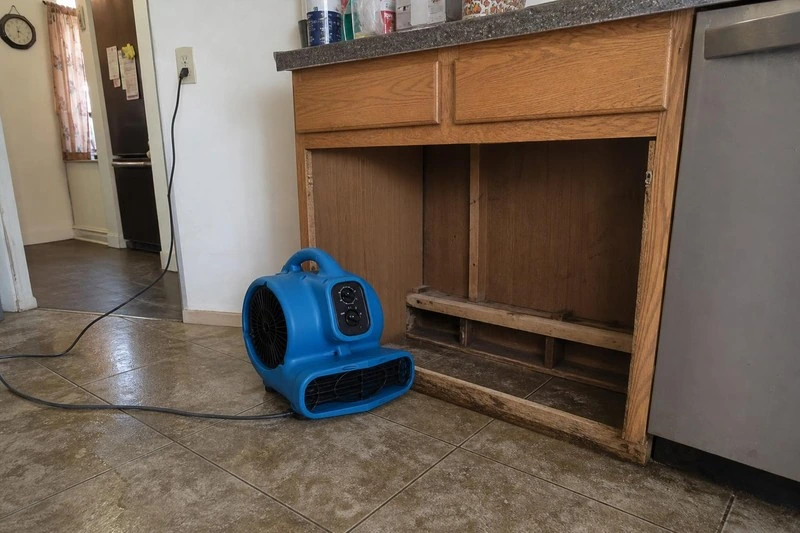
The air movers lift moisture out of the framing into the room. The dehumidifier pulls it back out of that air and sends it down a drain, so neither works well alone.
Getting air behind the wall means the baseboard comes off and small weep holes go in an inch above the floor. Structural drying is the part people underestimate, because a surface gives up its water long before the material behind it does.
The equipment stays until the shared assembly agrees from both faces. Pull it early on one side and the framing quietly feeds that side again.
Materials That Dry and Materials That Do Not
Waiting does not hold the damage still. Every hour the building stays wet, the list we can dry in place gets shorter and the list that leaves the house gets longer.
Carpet pad usually goes first, because it holds water against the slab and gives it back slowly. Drywall and insulation follow when the water climbed high enough or sat long enough to turn.
Contents are the part people regret. Anything made of pressed board swells and never comes back, and the wooden rocking chair in the corner is worth moving now.
Grade matters as much as time does. Clean water turns dirty while it sits, so a job that starts out salvageable does not stay that way.
Things worth doing first
- Stop the flow at the valve, because anything still feeding the room undoes the work before it starts.
- Kill the power to the wet rooms at the panel, but only if you can reach the panel on dry footing.
- Lift what you cannot replace onto something dry, beginning with whatever sits flat on the floor.
- Leave the wet trim alone for now, because the line it hides tells us how far the water traveled.
Working ZIP 84047 and the Cities Next Door
Midvale holds ZIP 84047 by itself, which makes the record for it unusually clean to read. No paid flood claim has ever come out of that ZIP.
That is why we work a Midvale address the way we do. The water almost always comes from inside, so we look at the room next to the wet one first.
The maps still put Zone AE and Zone X inside the city limits, and a floodway sits within the AE part. You can check where your own address falls on the FEMA flood map viewer.
The city stands at 4,388 feet in Salt Lake County. Midvale is a regular stop on the water damage work we run across Salt Lake City, and we map the rest of what we cover on one page.
Work next door goes to Murray, Sandy and Cottonwood Heights. While water is still on the floor, we do nothing but move it out of the building, and the mold side of it is a separate job with its own rules.
Mold Behind a Wall Means the Wall Is Still Wet
People respond to mold very differently, and some react hard inside a damp building. Whether it is affecting your health is a question for a doctor, not for us.
What we can say is that mold behind a wall means the wall is still wet. We do not test, inspect, or assess mold, so an independent assessment report comes first and our removal work follows it.
A musty smell in a concrete basement is not an air problem, so fresheners only move it around. Something down there is still holding water and feeding the smell.
Sequence fixes it. Find the wet material, dry it out, then clean the surfaces, and the smell leaves with the water.
Category 3 is the industry's name for the dirtiest grade of water in a building. It means the water carried sewage, or it sat long enough for what was in it to turn.
The grade decides what stays and what leaves. At that grade the carpet pad and soaked drywall come out instead of drying in place.
One Number Reaches the Whole Crew
The line rings through to a person at 3 a.m. exactly as it does at noon. Call Water Damage Restoration Salt Lake City and you hear an honest arrival time, not a script.
Two Spaces, One Visit, One Order of Work
Has the wet edge crossed into the next room yet? One call gets a truck-mount to Midvale and a meter on both faces of that shared wall.