
Water Damage Restoration Sandy UT
Check the ceiling above the wet floor before you touch anything below it. We open the highest soaked pocket in a Sandy home so the held water lands in a hose. One call, and tell us how far the stain has spread.
Getting the Standing Water Out of a Sandy Home
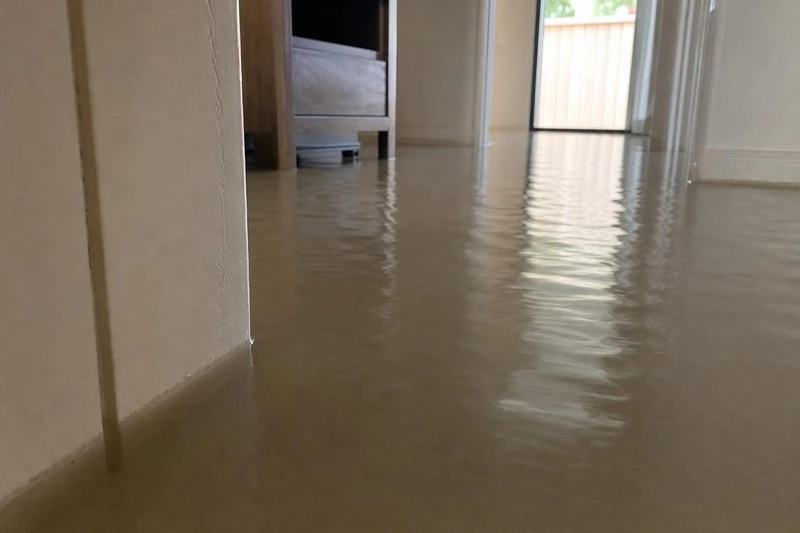
Is there water standing on a floor in your house? Getting it off that floor and out of the building is the job, and it is the part we handle first.
Water rarely stays where it landed. It runs downhill through the framing, spreads sideways under the flooring, and soaks into every absorbent material it passes on the way.
We run water damage restoration out of Salt Lake City, and Sandy sits inside the area we cover every day of the year.
What we check first
We find the top of the wet area before we touch the bottom of it. We shut the source down, then open the highest soaked spot and pull the held water out there.
We probe each level and mark how far the water actually traveled. That map sets the extraction plan, and the stain on your ceiling does not.
The reservoir the room does not show
A surface can read dry while the space underneath it holds gallons. Subfloor, joists, insulation and ductwork all take water in and then give it back slowly.
That held volume is the real problem when the water starts on an upper level. It sits over your living space and drips through seams and light fixtures for days.
So extraction on this kind of loss is never floor work alone. We have to find the pocket, open it, and remove the water before it feeds two more rooms.
Every hour that pocket stays closed, the water moves further along the joists. It wets insulation that was dry an hour earlier and it widens the repair.
We cut where the water is. A drywall cut line goes across the wet area, and the trapped water comes out of the ceiling into a hose right there.
Gravity keeps running while we work
Water that started on an upper floor can end up in two ceilings and a floor at once. Anything we dry underneath a wet pocket takes the water again from above.
So we finish the highest wet point before we touch the level under it. Working the other way around forces us to do the lower level a second time.
That order is the whole plan on a multi-level house, and it decides how long the equipment stays. Get the sequence wrong on day one and the job doubles.
- We stop and contain the source first, because water that is still arriving refills every room we just cleared.
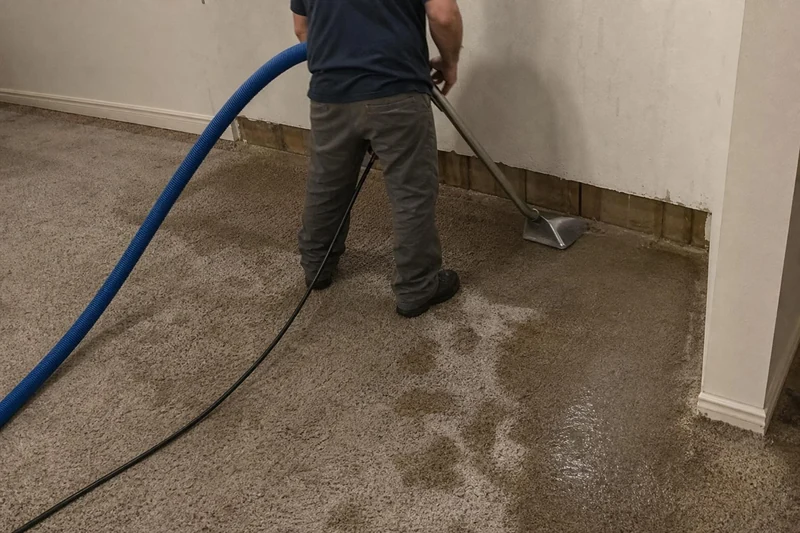
- We pull the standing water off the top wet floor, since a pump and an extraction wand move bulk volume far faster than any fan can.
- We open the ceiling below it on a cut line, so the water held between the levels lands in a hose instead of on your carpet.
- We finish that level before we touch the one under it, because a dried floor sitting below a wet one is only dry for an afternoon.
- We check every level with a moisture meter as we go, since the soaked area overhead is always wider than the mark you can see.
However the Water Got In
We get called for standing water, and what changes the job is how far it spread and what it soaked. The rest is detail we write down on the way past.
Sandy has 34,329 housing units, and 11,232 of them went up in the 1970s. That is the biggest decade in the city by a wide margin. Across the whole city, 41.6% of the housing predates 1980.
The median build year here is 1984, and 71.5% of Sandy homes stand detached on their own lot. A house like that gives water more floors and more framing to travel through.
Half-century-old supply lines and half-century-old tanks give out. A burst or frozen pipe is the loud version of that, and a water heater failure is the quiet one.
Appliances take the next share. A washing machine or dishwasher supply line splits at the braided hose, and a toilet or fixture overflow covers a whole floor in minutes.
When the drain side runs backward
A sewer or drain backup pushes water up through the lowest fixture in the house. That water is contaminated, so a lot more material has to leave the building.
A sump pump failure does similar damage without the smell. The pit fills, the float sticks or the power drops, and the basement takes the water instead.
Plenty of water arrives from outside the walls too. An ice dam holds melt on the roof until it backs up under the shingles, and a roof leak does the same thing without the ice.
Snowmelt and storm runoff find the low side of a lot instead, and push in against the foundation.
Below grade, a sprinkler or irrigation backflow can soak a wall in one night. Basement seepage and groundwater take longer over it, arriving after a long wet stretch.
Utah adds one more that most states rarely see. A swamp cooler, the evaporative cooler on the roof, holds a pan of water whenever it is running and can empty it into the ceiling.
Every one of those puts water on a floor. So the plan we bring is built around where it went and what it reached on the way.
Drying What the Water Reached
Extraction takes the water we can move. Drying takes the water that soaked into the building, and that half runs on the material's schedule instead of ours.
We stage dehumidifiers and air movers level by level, in the same order we extracted. We do not move the equipment down until the level above it is done.
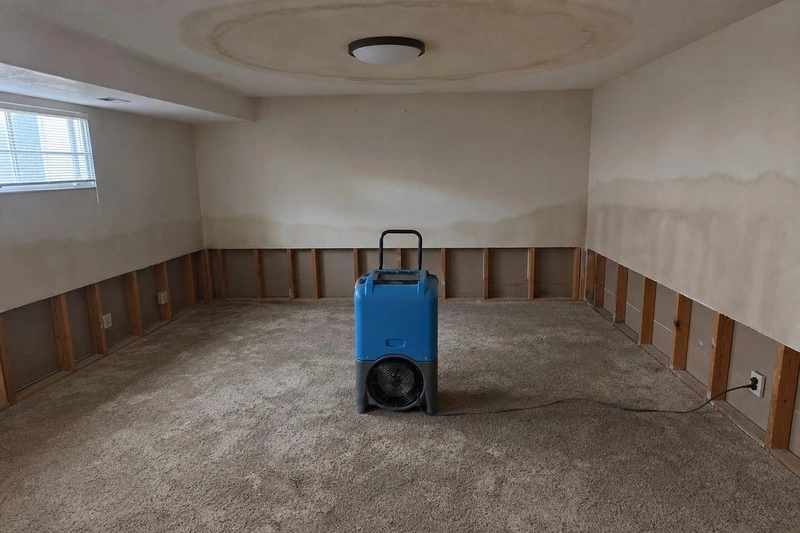
The thickest material sets the finish date. On a multi-level loss that is usually the floor structure in the middle of the house, and it comes right last.
We check it every day the equipment runs. When the numbers stop falling and hold there, the drying is finished and the machines come out.
What We Save and What Has to Go
Most of what gets wet in a Sandy house can dry in place. Framing, subfloor, hardwood and drywall above the water line usually stay where they are.
What leaves is the material that holds water and will not give it back. Carpet pad, wet insulation, particle board and drywall below the cut line go into the truck.
Contaminated water changes that math. If it came up a drain, soft material that touched it goes out even when drying alone would have worked.
We move the things you cannot replace before we move anything else.
- We lift furniture off the wet floor first, because a wooden leg standing in water swells and marks your flooring within hours.
- We get paper and fabric up high, since anything that wicks pulls water a foot above the water line on its own.
- We open shut doors and closets early, so the humid air behind them stops sitting on your clothes and your shoes.
- We write down every piece we cannot save, because a list made while the water is still here beats one built from memory weeks later.
You will get that list from us in writing. It names the room, the material and the reason it had to come out.
The Sandy ZIP Codes and Neighborhoods We Cover
We work all four Sandy ZIP codes: 84070, 84092, 84093 and 84094. The city sits in Salt Lake County at 4,782 feet.
Granite is the high corner of that, at 5,045 feet in ZIP 84092. Cottonwood Hills sits lower in ZIP 84094, and we cover Alta Canyon and Crescent as well.
The ground drops a long way from one end of Sandy to the other. Two houses a mile apart can take water in completely different ways because of it.
Sandy carries four flood zone designations, A, AE, AH and X, and the AE mapping here includes a floodway. None of that decides whether your floor is wet.
Sandy City runs a storm water program for the drains and channels along your street. The EPA keeps a homeowner guide to stormwater runoff aimed at the lot itself. Both of those work on the water before it ever reaches your foundation.
If water is still moving through the building, start with emergency water removal. If it has settled on the lowest level, a pump goes in before anything else, and our page on basements that filled covers what comes after.
We work the cities around Sandy too, including Midvale, Cottonwood Heights and Draper. Our service areas page names every city we drive to.
Tell us which floor the water is on and what sits directly under it. That is enough for us to load the right equipment before we pull out.
Claims, and the Cooler Sitting on the Roof
Only your carrier can answer that one, and the wording sits in your own policy. Some households compare the repair against the deductible first and decide not to file at all. We photograph the loss and log the readings either way, so the file is there if you want it.
Running it constantly is a question for whoever services the unit. What matters on our end is that the pan holds water the whole time it runs. A stuck float or a cracked line drips straight into the ceiling below. On a multi-level Sandy house that water can land two floors down.
Replacing one is not our work, so we will not put a number on it. The unit itself is a cooling trade job, and its price sits with them. Our end is the ceiling, the insulation and the flooring that leak reached before anybody looked up.
One Number Reaches the Whole Crew
The line rings through to a person at 3 a.m. exactly as it does at noon. Call Water Damage Restoration Salt Lake City and you hear an honest arrival time, not a script.
Which Floor Did the Water Start On?
Every hour that pocket stays shut, the water travels further along the joists. One call and we begin at the highest wet point in Sandy, not at the mark on the ceiling.