
Water Damage Restoration West Jordan, UT
Does your lower level run off one breaker or several? Water on the floor needs machines and machines need amps. Call with that answer and we size the drying plan to it.
Count the outlets in the room the water is sitting in, then count the breakers that feed them. That answer sets the ceiling on how much drying equipment can run down there at once, and the depth on the floor does not change it.
Water does not wait for the wiring to catch up. Every hour it stays, it moves further into the carpet pad, the baseboard and the lower edge of the drywall. The list of material still worth saving keeps shrinking.
Standing water spreads sideways for as long as it is left alone, and the wet edge keeps moving after the pump quits. Carpet pad, particle board and the paper face of drywall each pass a point where drying them stops working. Pulling the water off the floor early is what keeps those deadlines ahead of you.
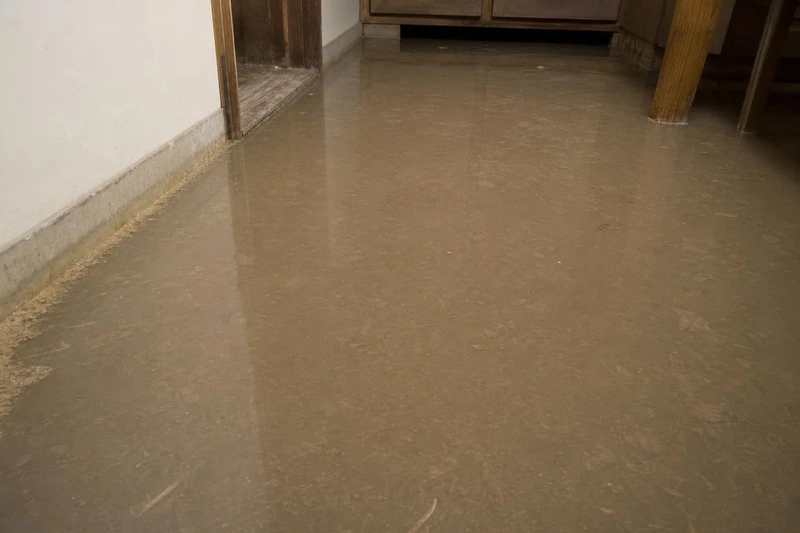
Staging the Extraction Against What a West Jordan Basement Can Power
The pump and the vacuum on a truck-mounted extractor sit outside the house, and that arrangement matters. Both run off the truck engine, so the first pass at standing water asks your panel for nothing. We treat that first pull on the water as the fastest hour of the entire job. We want it moving before anything else goes into a wall socket.
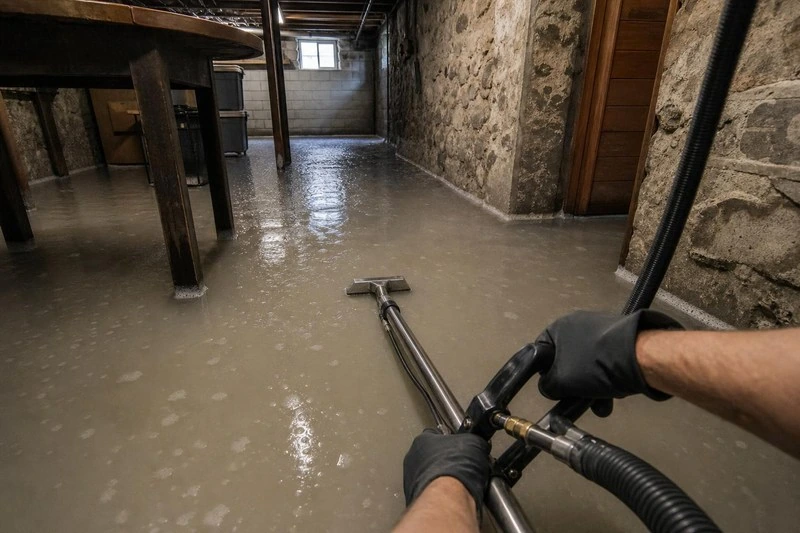
The amps start to bite the moment that first pass is finished. Air movers, dehumidifiers and a containment fan all want wall power. A finished basement here is usually served by a handful of general circuits, and two dehumidifiers on one of them will trip the breaker.
A tripped breaker costs almost nothing to reset. What it costs is the overnight run those machines were meant to make, and that time never comes back. The wet edge keeps traveling while the fans sit dark.
So we settle the electrical budget before a single machine lands on the floor. It is a slower start and a considerably faster finish, and on a soaked basement the finish is the part you remember. Call us while the water is still standing, and say how many breakers feed that level.
Working out the power before the machines go in
- The panel. We find which breakers actually reach the wet level, because a finished basement rarely gets its own.
- The load. Every air mover and dehumidifier carries a draw, and we add those totals up before anything goes on the floor.
- The order. Extraction runs on truck power first, then we stage the machine count to what the circuits hold.
Looking for What Let Go in West Jordan's Newer Housing Stock
West Jordan counts 37,496 housing units. The largest block of them, 9,406, was finished during the 1990s, and another 8,627 followed in the 2000s. Equipment installed alongside a house reaches the end of its service life alongside the house.
Failures that announce themselves the moment they begin
Most of what we pump out arrived fast and made a racket doing it. A water heater gives out at the tank and dumps its whole load on the floor. A burst pipe behind a wall puts water across a finished floor in minutes.
The braided hose feeding a washer or a dishwasher can do it just as fast. A sewer line or a floor drain can back up and send it the other way, and that water is never clean. A toilet or a bathroom fixture overflowing upstairs sends the same volume down through the ceiling.
Storms bring another pair together. A sump pump quitting under heavy runoff, or spring snowmelt landing on saturated ground, both push water at a foundation faster than the soil takes it. The city's own stormwater program at West Jordan public works covers where that runoff is meant to go.
Failures that run quietly for weeks first
The remainder of our calls begin with water that has been arriving slowly for a while. A roof leak drips into the framing for weeks before a ceiling shows it, and an ice dam at the eave does the same thing by backing meltwater up under the shingles.
A sprinkler or irrigation line pushes water back at the foundation every time that zone runs. Groundwater seepage through a basement wall soaks the bottom of a finished room slowly enough that the carpet hides it.
The final one is nearly a Utah signature. A swamp cooler, the evaporative unit on the roof, drips down its own supply line for as long as it is running. Evaporative coolers sit on older roofs, and 19.5 percent of West Jordan's housing was finished before 1980.
Machines Run in Waves in a Basement Wired for a Family Room
Drying is never a single push. Air movers drive a thin, fast layer of air over every wet surface, and dehumidifiers pull the water they release back out of the room. Run a full set of both on a circuit built for a lamp and a television, and the level goes dark.
So the machines run in waves, and the shortest clock earns the first wave. Carpet pad and the lower band of drywall become unsalvageable faster than a hardwood floor does. Drying mats sealed to the hardwood follow, pulling water up through the boards while the fans work elsewhere.
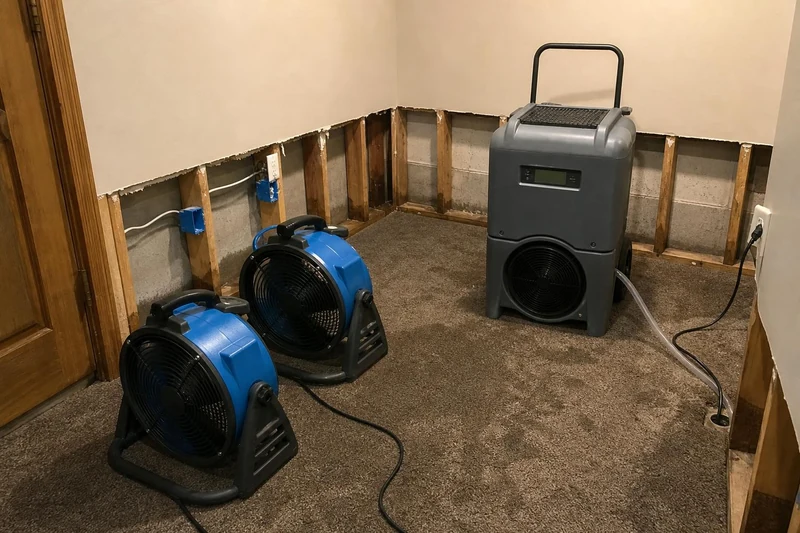
Waves stretch the calendar, and we would rather say so plainly. A level with several circuits finishes structural drying in fewer days than the same level running off one. That is the trade, and it is why we ask about your panel before we load the truck.
Containment keeps the dry air where it earns its keep
A containment wall of sheet plastic shrinks the volume the dehumidifiers have to work on. Less air to dry means fewer machines, and fewer machines means the circuits stop setting your schedule.
Everything a Finished West Jordan Basement Holds Has Its Own Deadline
Some of what is down there survives and some does not, and the difference is mostly elapsed time. Clean water caught early saves material that the same water saves nothing of a day later.
Carry the irreplaceable things up the stairs before our equipment arrives. Think of a christening gown boxed since the eighties, food storage on basement shelving, an instrument in its case. None of those come back from a long soak.
- Carpet pad. It comes out first and rarely goes back in, because it holds more water than anything else on the floor.
- The carpet above it. Clean water and an early start usually save it, while a full day of sitting does not.
- Drywall. We cut the lower band where the paper face has wicked water up past what a fan can reverse.
- Particle board furniture. Once the edges swell there is nothing to dry back down to, so it leaves with the pad.
- Hardwood flooring. Mats and patience save it, and it is the material a late wave costs you outright.
What a basement collects over the years
26,790 of West Jordan's structures are single family detached houses, and a basement under one of them collects belongings for decades. That is why flooded basement cleanup here is as much a sorting job as a drying one.
Copper Hills to Jordan Oaks, and the Three ZIP Codes Over Them
Copper Hills, Cobble Creek, Welby, Jordan Hills and Jordan Oaks all sit inside the same three ZIP codes: 84081, 84084 and 84088. Gardner Village falls in 84088 as well, and we work the blocks around it on the same terms.
The ground under none of it is flat. The city figure is 4,668 feet, Jordan Oaks reads 4,568 and Jordan Hills reads 5,049, with Copper Hills at 4,672 between them. Water inside a subdivision runs downhill the way it does outside one, so the lower end of a street fills first.
When the melt is running, the United States Geological Survey posts live streamflow and water conditions across Utah, and that is the quickest read on what the season is doing. All of this is Salt Lake County, inside the Salt Lake City-Murray metro area, and our yard sits 7.4 miles from the nearest West Jordan city line.
South Jordan, Kearns and Midvale are the next three we drive to, and the full list of cities we cover runs from here. We run the same job across the rest of the county, and it opens with the same question about your circuits.
Who to Call, and Which Half of the Bill Is Ours
Call us at (801) 903-2904. Shut the water off first if you can reach the valve from dry ground. We answer at any hour, and the extractor goes in before the fans do. Tell us how many breakers feed that level, because it sets how much drying equipment can run down there.
Most policies split a sudden loss from an improvement to the building. Waterproofing lands on the improvement side, so it usually comes out of your pocket, and your own wording settles it. What a carrier looks at instead is the water that already got in and what it ruined.
The answer splits before it starts. Sealing a wall or regrading a lot is construction work, and that trade prices it. Our share covers the water removal, the material that comes out, and the days the machines run. Hours on the clock move that share more than anything else.
One Number Reaches the Whole Crew
The line rings through to a person at 3 a.m. exactly as it does at noon. Call Water Damage Restoration Salt Lake City and you hear an honest arrival time, not a script.
How Many Circuits Serve That Level?
Two machines on one circuit can trip the breaker, and a tripped breaker costs more hours than working out the power ever does. We would rather know what feeds that level before we load the truck.